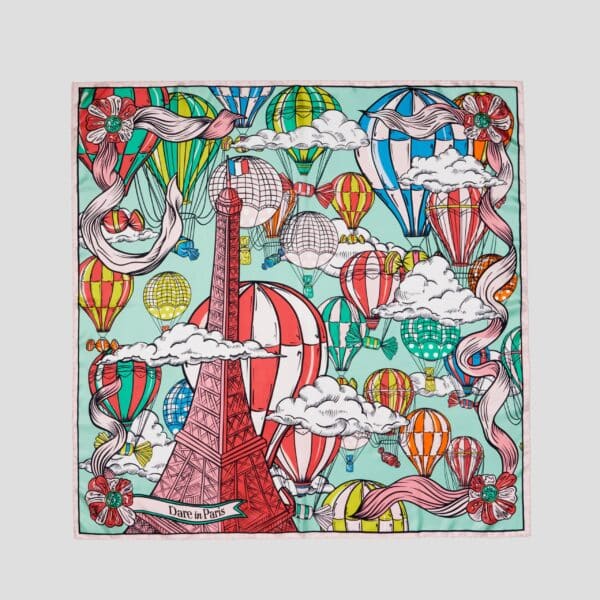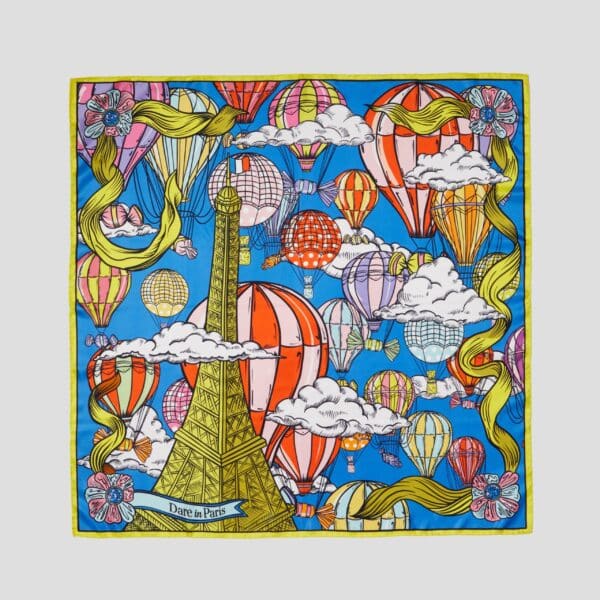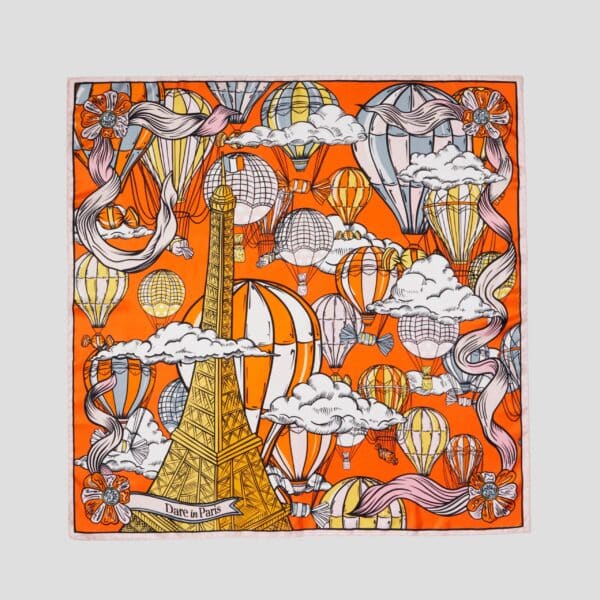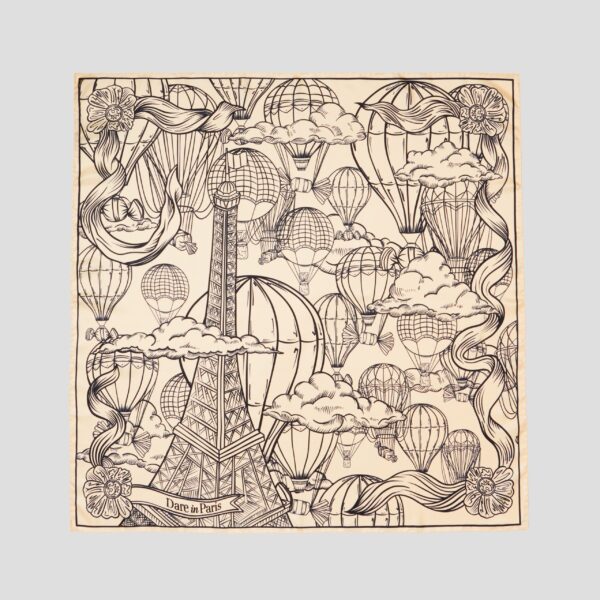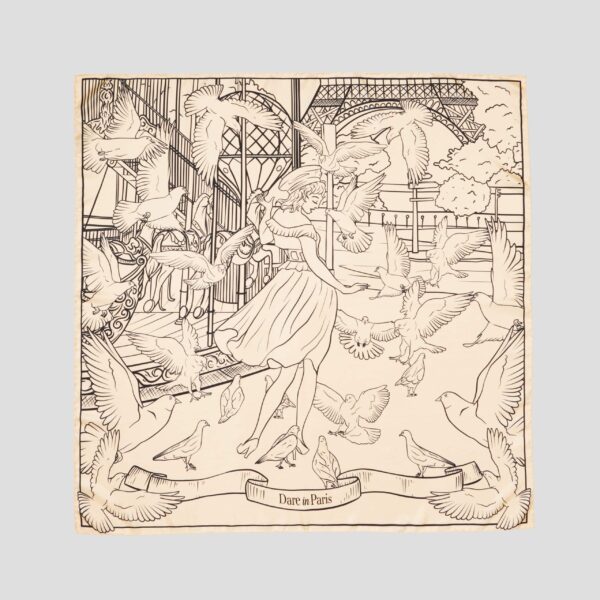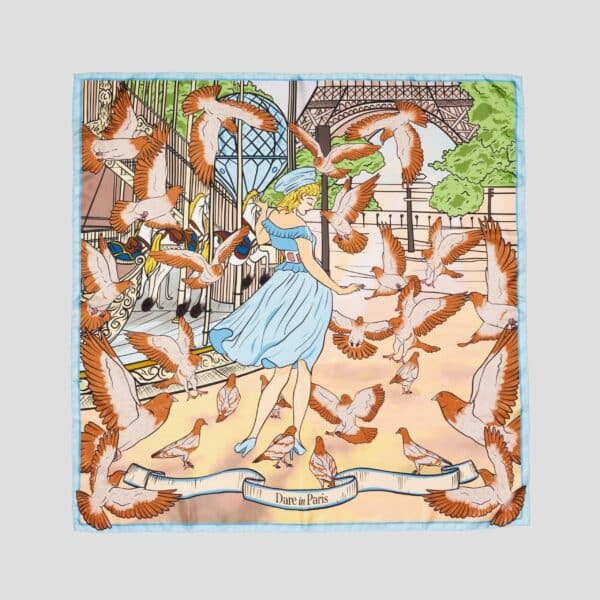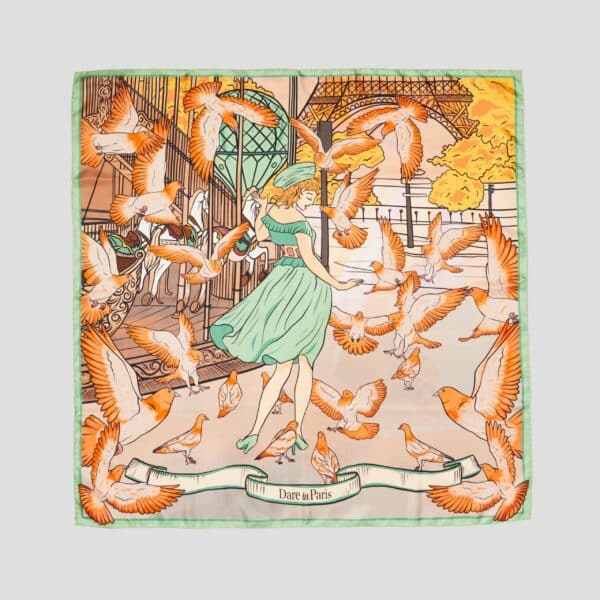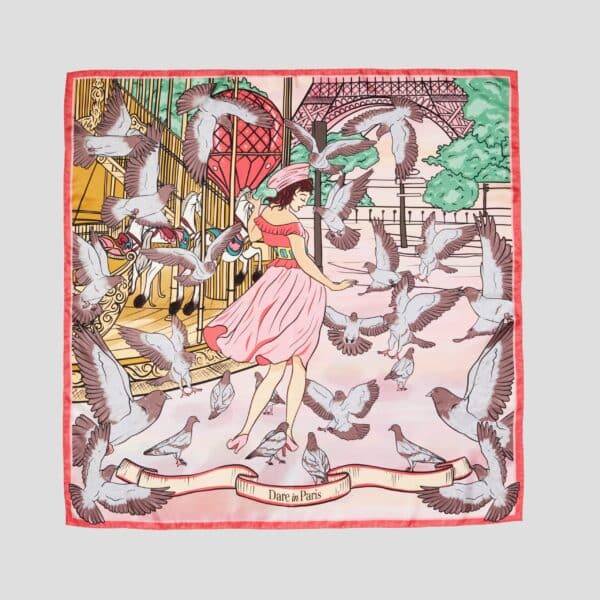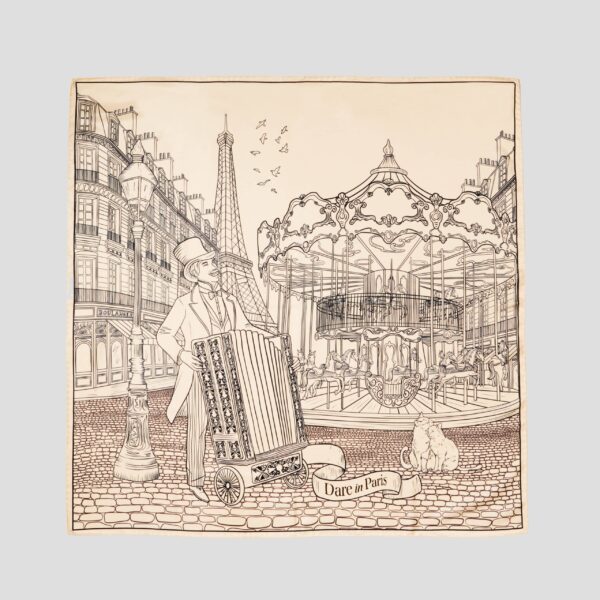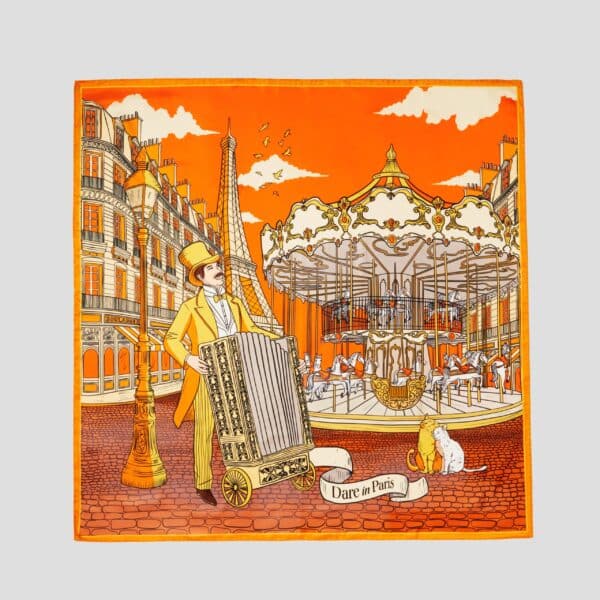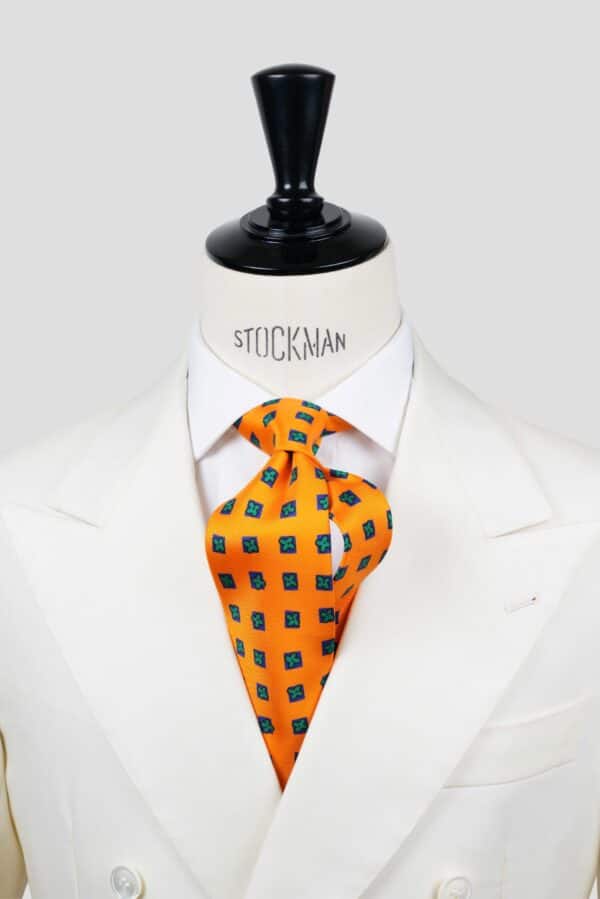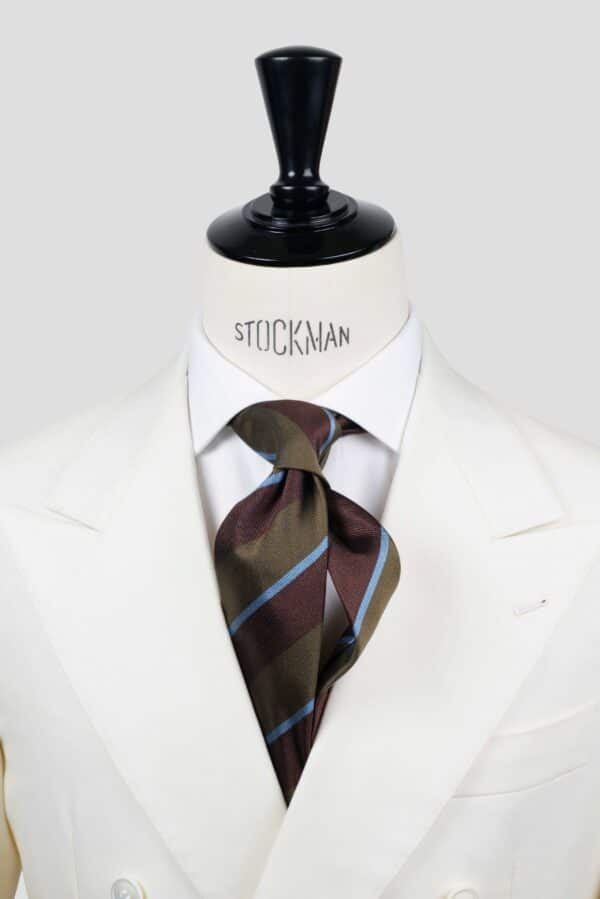

Silk vs polyester: to tell them apart, lay your hand on the fabric. Silk takes the warmth of your skin within seconds, polyester stays cold and smooth. Add the luster, the creasing, the sound of the fabric rubbed against itself and a careful reading of the label, and mistakes become rare. This guide, written by an online Maison based in Paris, details each test and its limits, what sets a quality silk apart, and the honest way to care for it, including how to wash a silk scarf.
None of these tests is foolproof on its own. Together, they give a reliable verdict in under a minute, at home or in front of a store shelf.
Lay your palm flat on the fabric and keep it there for a few seconds. Silk warms up on contact with the skin and feels warm almost immediately. Polyester stays cold and smooth, with a slip that recalls a plastic film.
Hold the fabric near a window and tilt it. The silk fiber has a cross section close to a triangle, which breaks up the light: the sheen is nuanced and changes with the angle. Polyester throws back a white, uniform shine, identical from every angle.
Squeeze a corner of the fabric in your fist for ten seconds, then let go. Silk marks: fine creases appear, then fade within a few minutes as the fabric relaxes. Polyester barely marks and comes out of your fist just as it went in.
Rub two layers of fabric against each other, close to your ear. Silk produces a dry, light rustle that silk makers call the scroop of silk. Polyester slides in silence or with a dull swish. This scroop also depends on the finish given to the fabric: its absence does not condemn a piece, its presence is a good sign.
Pull the scarf through a ring. A fine silk glides through in a single movement, without catching. Take this test with caution: it depends first of all on the thickness and surface of the fabric. A dense silk twill can catch, a polyester chiffon can pass through effortlessly.
In Europe and in the United States, the fiber content of a textile article must appear on the label. Look for the words 100% silk. Beware of wordings that borrow the word without naming the fiber: “artificial silk”, “vegetable silk” and “art silk” mean viscose. “Satin”, “twill”, “chiffon” or “crepe” name a weave, not a material: a satin can be polyester. A piece with no fiber content label deserves doubt.
A square in printed silk twill, hand rolled, does not sell for the price of a mass market synthetic scarf. A low price is therefore a reliable signal in one direction: at a few dollars, the fabric is not silk. The reverse does not hold, as a high price has never guaranteed the material. The price is read together with the label, not instead of it.
Turn the piece over and look at the hem. A hand rolled edge forms a small, slightly irregular roll, with almost invisible slip stitches and a slight unevenness at the corners. A machine hem is perfectly regular, flat, with a tight, continuous stitch, sometimes an overlock. This is less a fiber test than an economic clue: hand rolling costs too many hours for a cheap fabric, so it is almost always found on silk. A stiff edge, as if melted, often betrays a heat cut on a synthetic.
It is the surest test, and the least advisable on a finished piece. Never apply it to the scarf itself: take a loose thread from the label, from an inside seam or from a sample, work over a saucer, with water within reach.
Silk, an animal fiber, burns slowly, curls up and often goes out on its own once the flame is removed. It gives off a smell of burnt hair and leaves a black, crumbly ash that crushes into powder between the fingers. Polyester melts before it burns: it shrinks away from the flame, gives off black smoke with a plastic smell and hardens into a small dark bead that cannot be crushed. A blend gives an in-between result, often an ash that encloses a bead.
High end polyester satins imitate the luster well. Finished and calendered, they pass the luster test to a hurried eye. Touch and creasing usually catch them out: they stay cold and do not mark.
Conversely, some silks do poorly on the classic tests. A sand washed silk has a matte hand, close to peach skin, and barely shines. A wild silk, tussah or shantung, is irregular, rougher, with slubs in the yarn. When in doubt, the label and the burn test settle the matter.
Finally, blends blur everything: a silk mixed with viscose or polyester behaves in a hybrid way on every test. Here again, only the written fiber content is authoritative.
Knowing that a scarf is silk does not yet tell you whether it is well made. Four points separate a beautiful silk from an ordinary one.
Twill is recognized by its fine diagonals, visible in raking light. This weave gives the fabric hold and a dense drape, without stiffness: a twill square keeps a knot, a satin that is too fluid sags.
Turn the piece over. On a fine print, the pattern appears on the reverse almost as sharp as on the front: the colors have gone through the fabric, what French printers call la traverse. A pale or whitish reverse signals a surface print, cheaper, which dulls with rubbing.
Described above, it gives the edge weight and roundness, and represents hours of work that nobody invests in a mediocre material.
A fiber content written in black and white, a precise weaving origin, a named place of making: a house that knows where its silk comes from says so. The price follows these operations, and does not drop to the level of a fabric worth a few dollars.
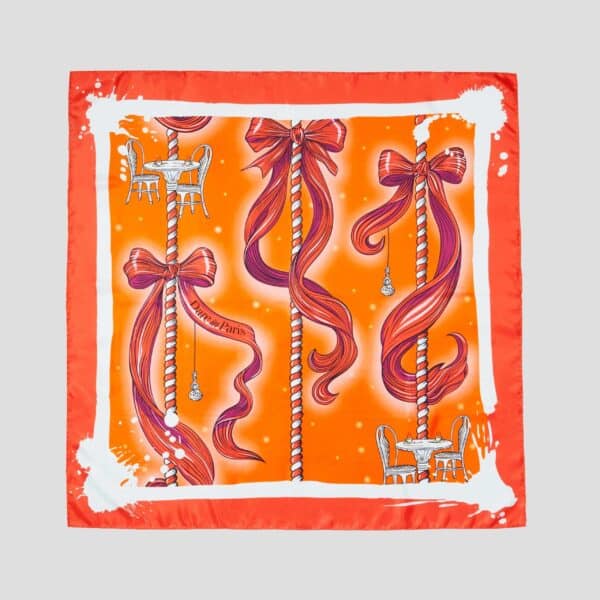
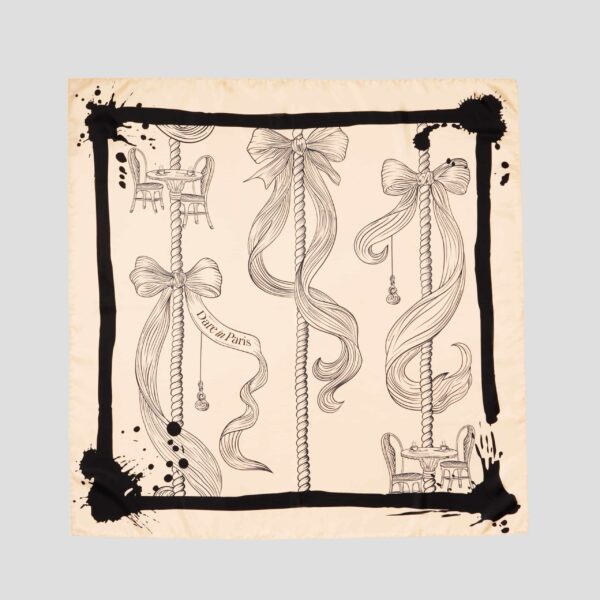
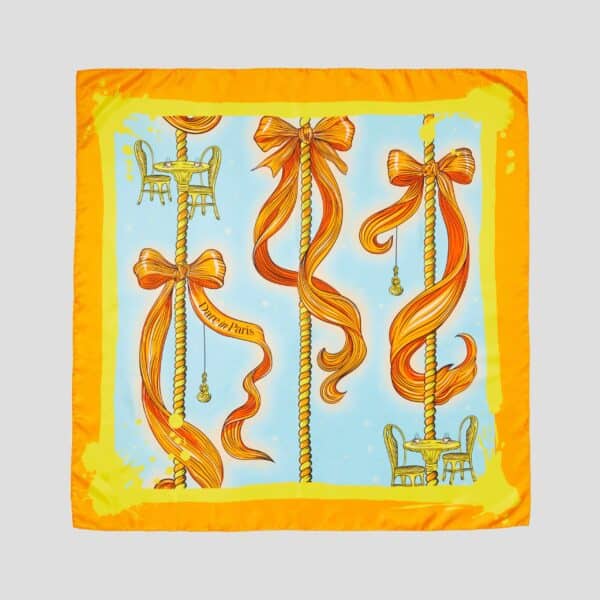
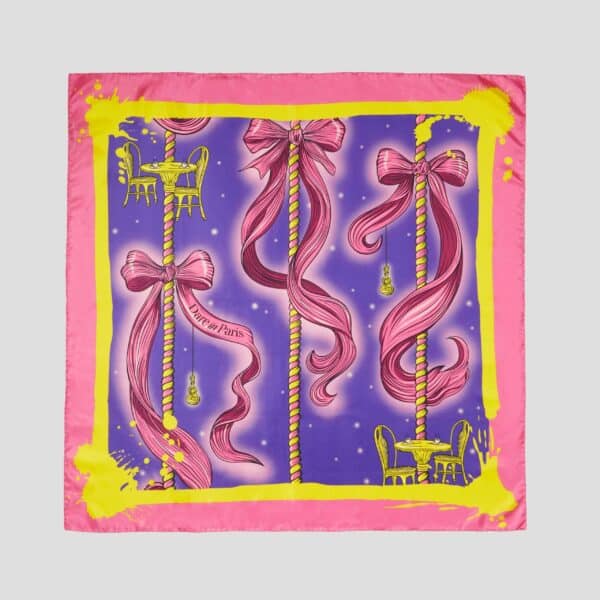
Dare in Paris is an online Maison based in Paris. Every piece meets the criteria above, and each one can be checked on delivery.
Each of these pieces is worn by women and men alike. For the gestures, the guide on how to tie a silk scarf details the knots according to the format.
The honest answer fits in three words: as little as possible. Silk cannot be machine washed and does not take water well.
A printed square is not a piece of plain silk: it is colors fixed on the fiber, a hand rolled edge, sometimes a lining or a hem. Water acts on each of these elements. It marks printed silk, with rings that appear as it dries. It makes the lining or the hem ripple, as their thread does not shrink at the same rate as the silk. A scarf that has been through water rarely comes out as it went in: hand washing is therefore not a routine care method for a printed silk with hand rolled edges.
A stain only comes out with professional dry cleaning. Do not rub, do not wet, do not try a household stain remover: each of these actions sets the stain or adds a ring. Take the scarf quickly to a dry cleaner who specializes in silk, and say what caused the stain.
Between two cleanings, silk is refreshed without water. Lay the scarf flat, in a ventilated room, away from the sun, for a few hours. For a crease, use a steamer held about 4 inches (10 cm) from the fabric, without ever placing an iron directly on the silk. Then store the piece flat or rolled, away from light.
No. Silk cannot be machine washed and does not take water well, even on a delicate cycle. A printed silk comes out with rings, a dulled luster and a rippled hem. For cleaning, go to a dry cleaner who specializes in silk.
A stain only comes out with professional dry cleaning. Do not rub and do not apply water or stain remover: the gesture sets the stain or creates a ring. Take the piece quickly to a dry cleaner who handles silk, and say what caused the stain.
Gather several clues: the fabric warms in your hand, its sheen changes with the angle, it marks in your fist then relaxes. Then check the words 100% silk on the label, the reverse of the print and the hand rolled edge. The burn test, on a loose thread only, settles any doubt.
With a steamer, held about 4 inches (10 cm) from the fabric, moving slowly without touching the silk. Never place an iron directly on the silk. A light crease often fades on its own, with the piece laid flat.
Flat or rolled, away from light, which dulls the colors of a print. Rolling rather than folding prevents a crease from always marking in the same place.
From the workshop
Drawn in Paris, printed in Italy and hand rolled in our Paris workshop, holder of the Fabriqué à Paris label.

Service client disponible 7j/7.
Delivery within 48 hours in France, from 3 business days abroad.
Returns within 14 days. En savoir plus.