
Our craftsmanship
Dare in Paris makes silk ties, bow ties, square silk scarves and long scarves.
Each piece starts from a motif: drawn in Paris for the silk scarves, composed or selected for the other pieces. The silk comes from the Lake Como region, woven or printed depending on the piece.
Then come the gestures that only the hand knows: tracing, cutting, assembling, rolling a hem.
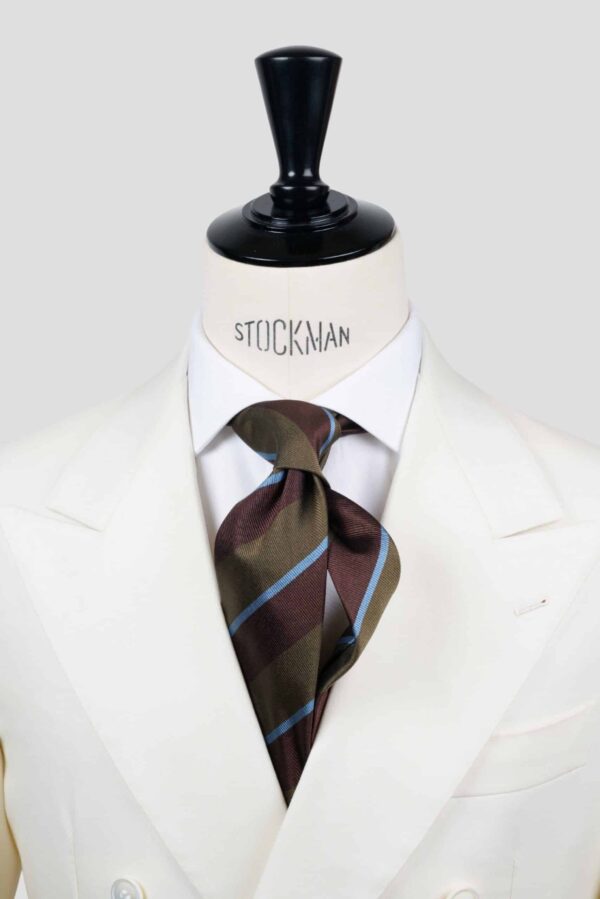
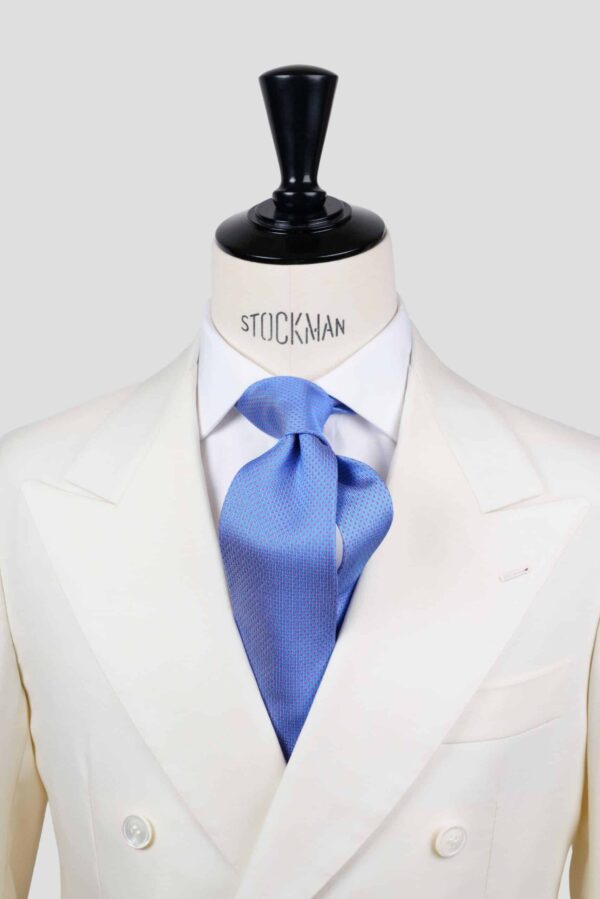
The three fold ties, the bow ties, the square silk scarves and the tube scarves are made by hand in Paris, in a workshop that holds the Fabriqué à Paris label, the official label of the City of Paris. The seven fold ties are sewn by hand in Italy, by a family workshop. The long scarves and the other scarves are made in Naples.
Here, step by step, is what happens between the motif and the box.
- The motif: drawn in Paris for the silk scarves, composed or selected for the other pieces
- The silk: woven or printed in Italy
- The assembly: traced, cut and sewn by hand
- The guarantee: the Fabriqué à Paris label
01. The motif: drawn, composed or selected
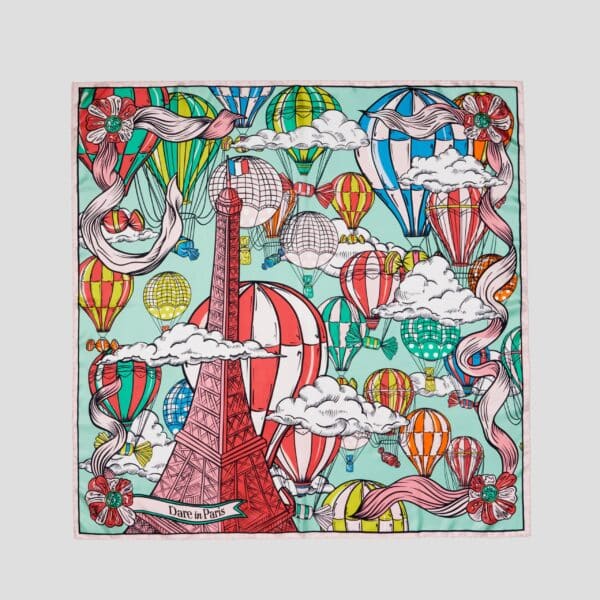
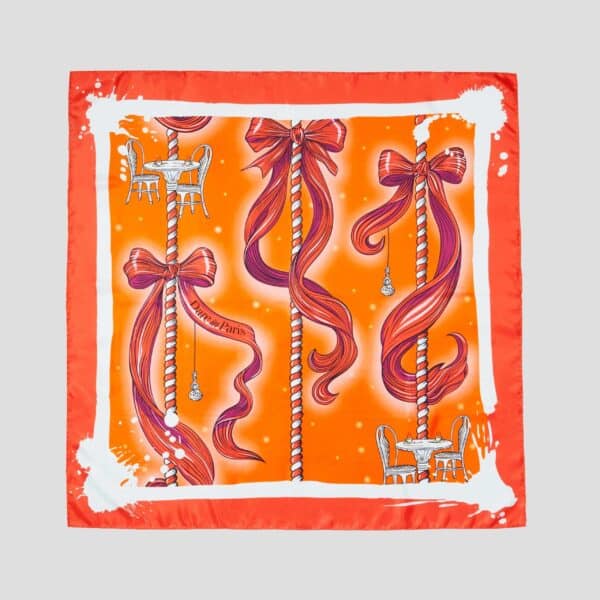
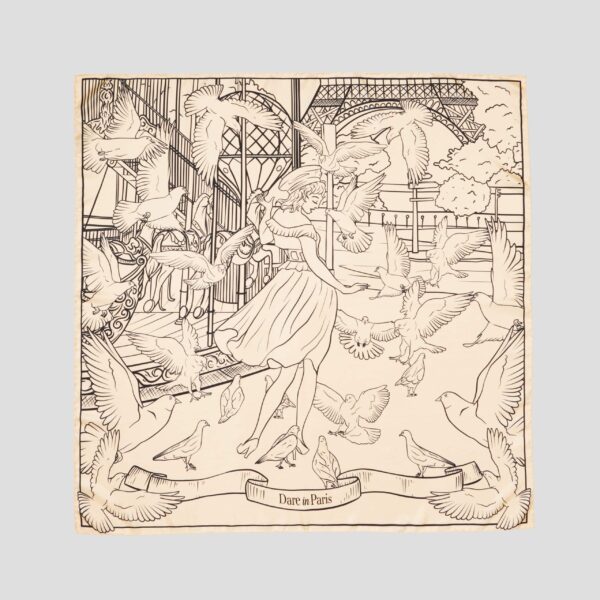
A barrel organ playing on the cobblestones, a carousel waiting for its first riders: the motifs of “L’orgue du Boulevard” and “Rayures de carrousel” are drawn from Paris scenes, as are “La valse des colombes” and “L’envol des gourmandises.”
The motifs of our silk scarves are drawn in Paris, by hand, and exist only at Dare in Paris.
For our seven fold ties, the motif takes shape in Como: created or chosen, then composed color by color into the final design.
For our other pieces, the motifs are selected one by one. Each piece is then traced, cut and assembled by hand.
02. The silk: fabrics in 100% pure silk, each with its own weave
The shell of every piece is 100% silk, woven or printed in the Lake Como region of Italy: printed twill for our silk scarves; woven silk and grenadine for the thickest three fold ties; madder silk for connoisseurs and lovers of its unmistakably downy touch: a true must-have.
Light, fluid and soft, silk twill has a pleasant hand and a natural drape.
The twill of our silk scarves weighs 12 momme, about 52 grams per square meter. Momme measures the density of the weave; it says nothing about the quality of the yarn or how the silk feels to wear. What gives the scarf its hand and its drape are the steps that follow printing in Como: the steam that sets the colors, the washes that remove the excess, then the finishing that softens the silk.
The fabric decides the drape.
03. The hands: the gestures behind handmade silk ties
The edges of our silk scarves are rolled entirely by hand: a craft gesture that takes between half an hour and a full hour, depending on the artisan. The same finish is found on our tube scarf, sewn as a closed tube and lined with silk.
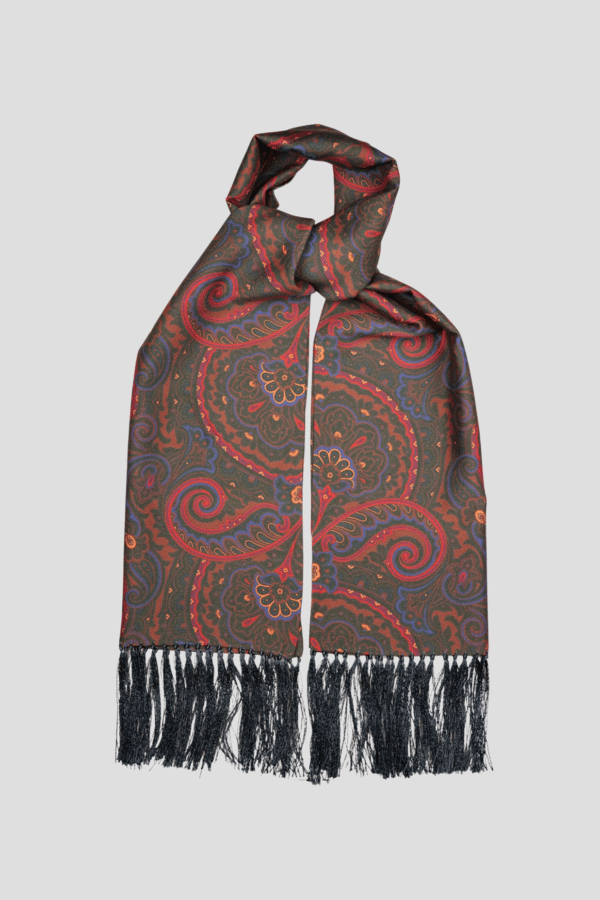
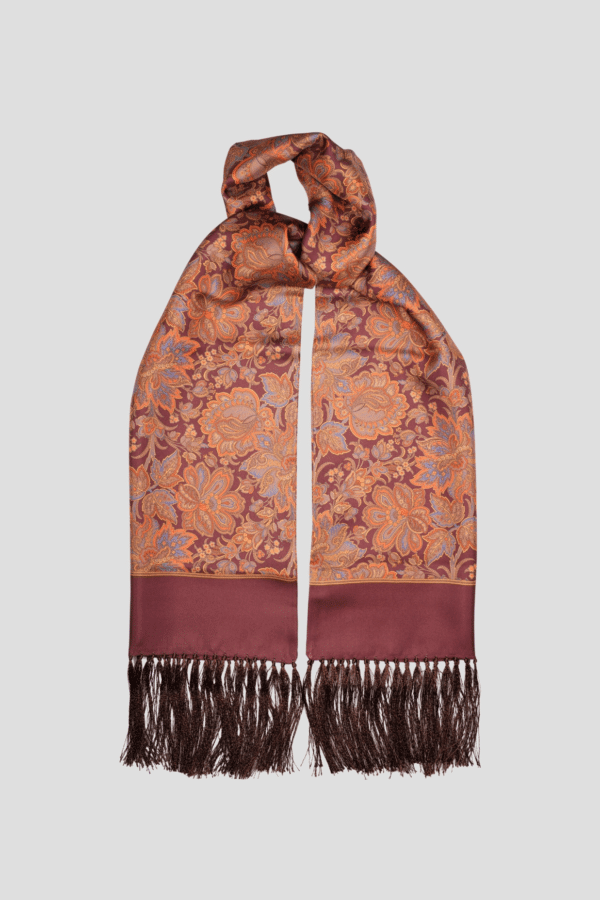
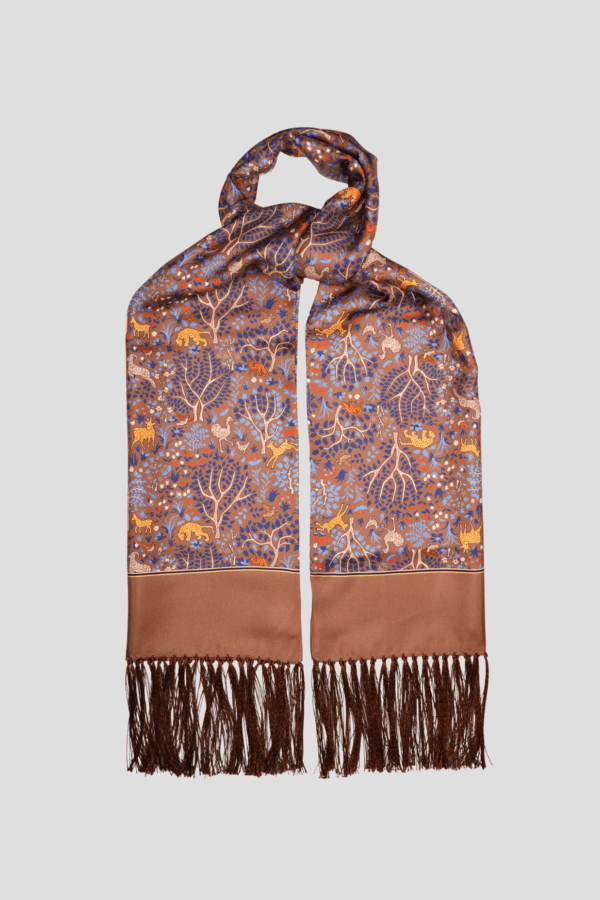
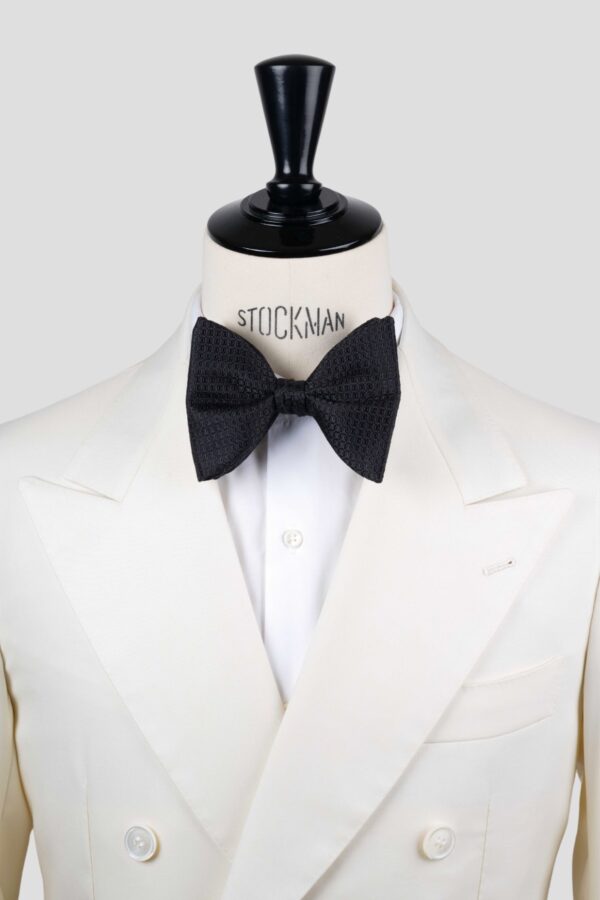
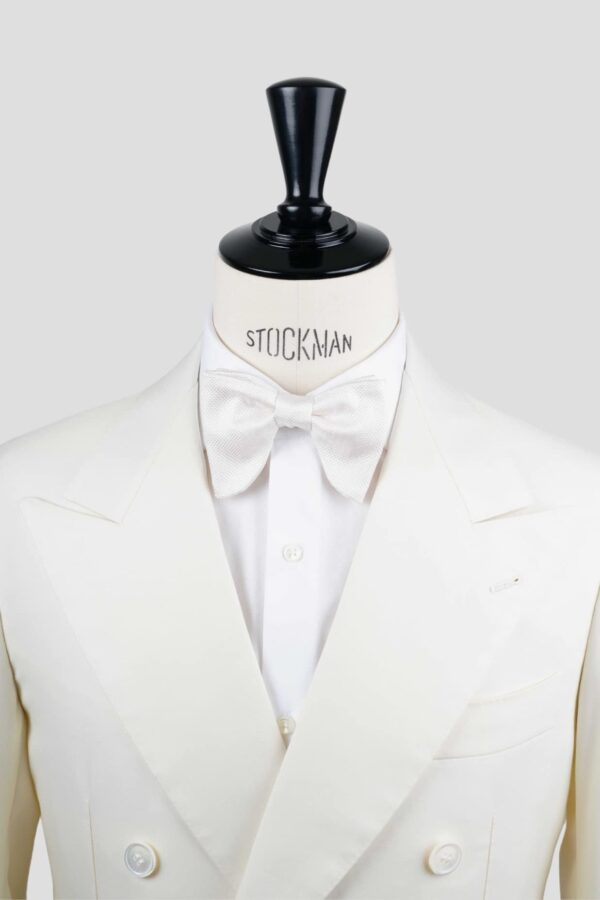
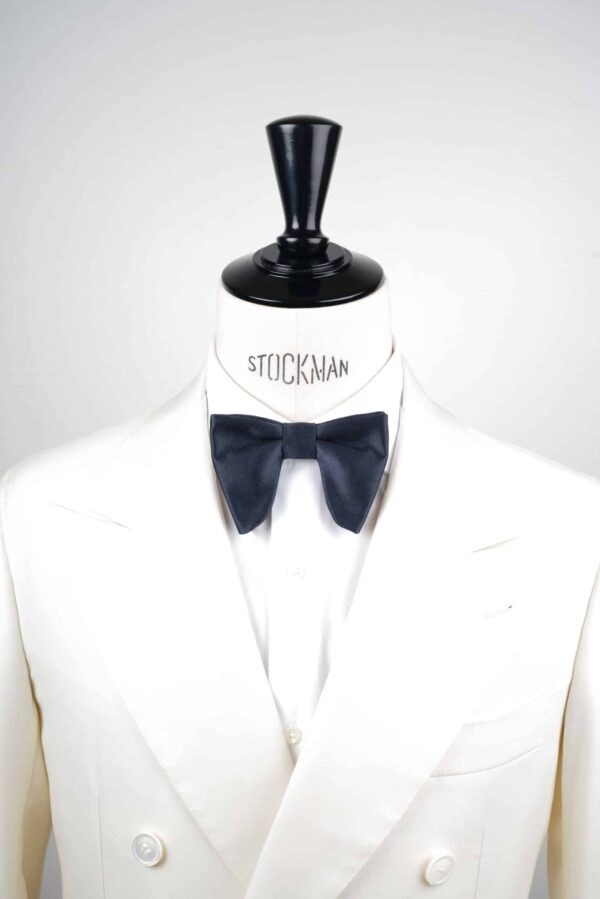
On the long scarves, made in Naples, the fringes in silk thread are woven on a separate loom, then sewn onto the piece by hand. A bow tie is cut and sewn by hand, then fitted with an adjustable neckband that closes behind the shirt collar.
Rolling a hem is the longest gesture; no machine replaces it.
04. Time: luxury is not speed
Luxury is the time given to making.
A piece passes through two or three pairs of hands before it reaches you. Assembling a three fold tie by hand takes several hours of work. No step is hurried to meet a deadline.
05. The living detail: proof that a hand passed through
No two pieces are ever perfectly identical. A hesitation, a stitch taken again, a tiny adjustment: this is not a flaw. It is what separates a piece made by hand from a piece made industrially.
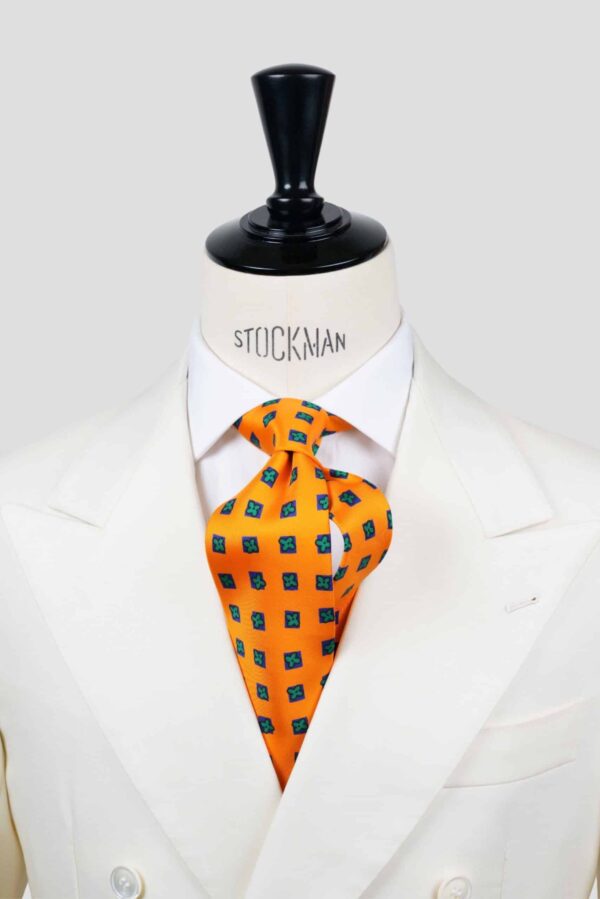
On a tie, the dimple that forms under the knot is another sign: it appears only on a well made tie.
06. The tie: anatomy of a three fold tie
The tie is the only object of the Maison whose structure is invisible once it is worn. The three fold ties are nonetheless entirely assembled by hand, in Paris, on a wool based interlining that runs the whole length.
Interlining, tipping, collar stitch, bar tack: each term matches a gesture and several minutes of work.
- Interlining
- Wool based, along the whole length of the tie
- Tipping
- Both ends, the blade and the tail, tipped by hand
- Collar stitch
- Keeps the tie in place under the folded collar
- Bar tack
- The hand stitch in silk thread that holds the folds together
- Length
- About 147 cm (58 inches), blade about 8 cm (3.15 inches) wide
- Assembly
- The three fold tie is traced, cut and sewn by hand in Paris
07. The box: leaving the workshop
Your piece leaves the workshop in its box, sealed with the Maison’s seal. The wax is made in France, from a recipe unchanged since the reign of Louis XIV.
A thank-you note accompanies your piece in its box.
08. Worn: and soon there will be you
Between the workshop and the street there is time, there are gestures, there is an intention. Ties, bow ties, squares and scarves are worn by men and women alike.
A piece is finished only on the day it is worn.
In the press
Dare in Paris has been featured by Madame Figaro (2021), Jamais Vulgaire, Borasification.
The pieces born from these gestures
Silk ties, three fold and seven fold, silk bow ties, square silk scarves and long scarves and tube scarves.
For the gestures that come after the workshop, the guide to tying a tie, the guide to tying a bow tie and the guide to tying a silk scarf.
Frequently asked questions
How do you care for a silk piece?
Silk does not go in the washing machine and reacts badly to water: a drop leaves a ring as it dries. A stain is removed only by a professional dry cleaner. Store the piece flat or rolled, away from direct light. A crease is treated with a garment steamer held about ten centimeters (four inches) away, never with an iron placed directly on the silk.
How long does it take to make a piece?
Assembling a three fold tie by hand takes several hours of work. The fringes of a long scarf are woven on a separate loom before being sewn onto the piece by hand.
What does the Fabriqué à Paris label mean?
Fabriqué à Paris is the official label of the City of Paris for pieces made in a Paris workshop. The Dare in Paris workshop holds it for the pieces it makes: three fold ties, bow ties, square silk scarves and tube scarves. It does not cover the seven fold ties, sewn in Como, or the long scarves and other scarves, made in Naples.