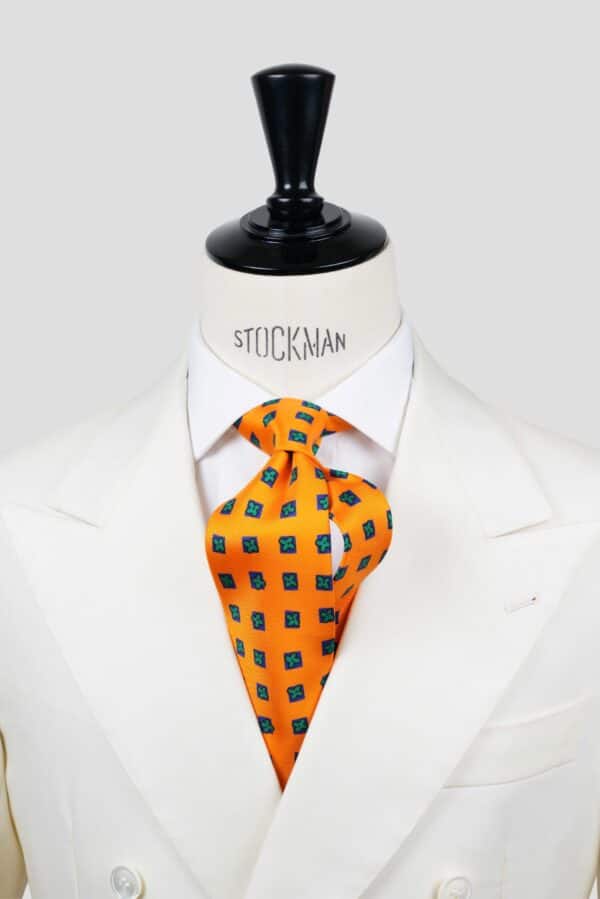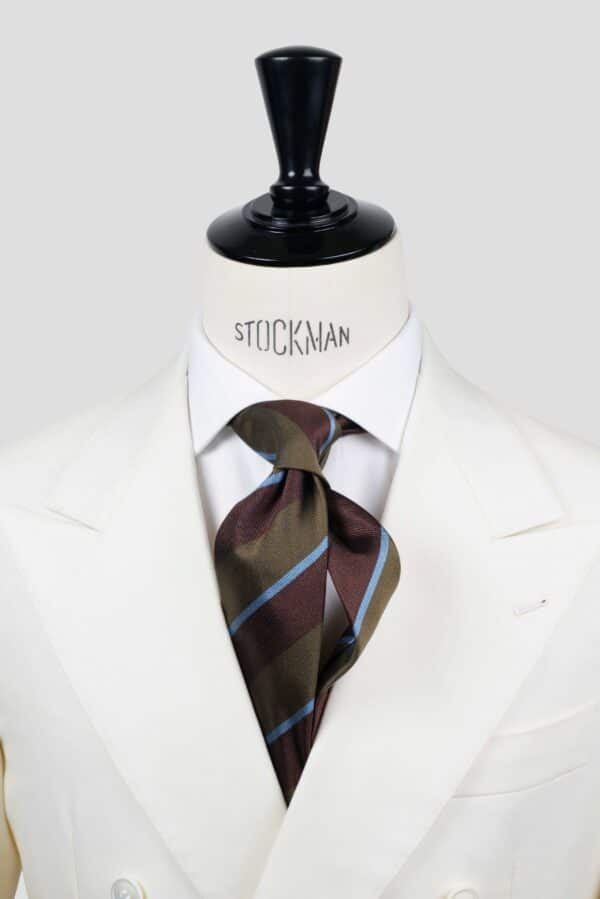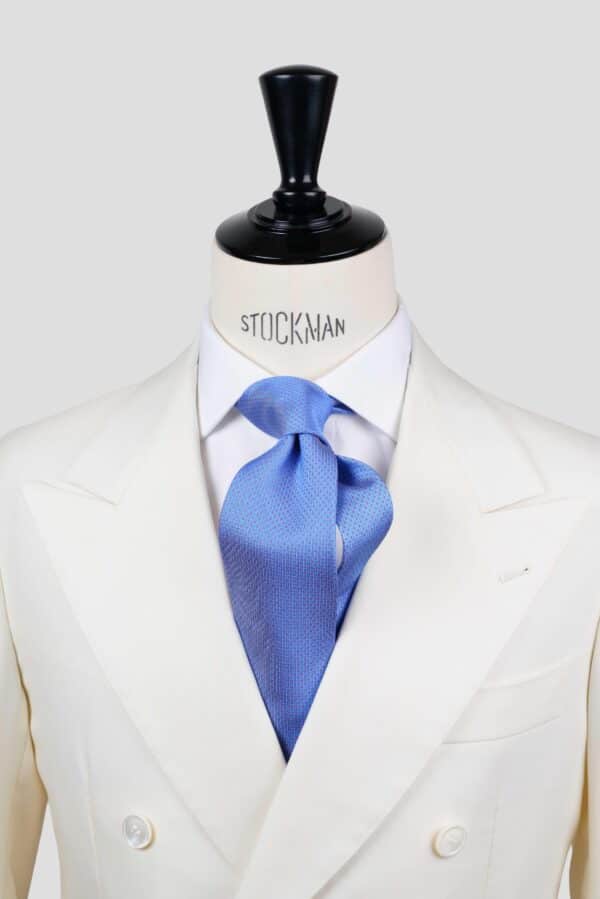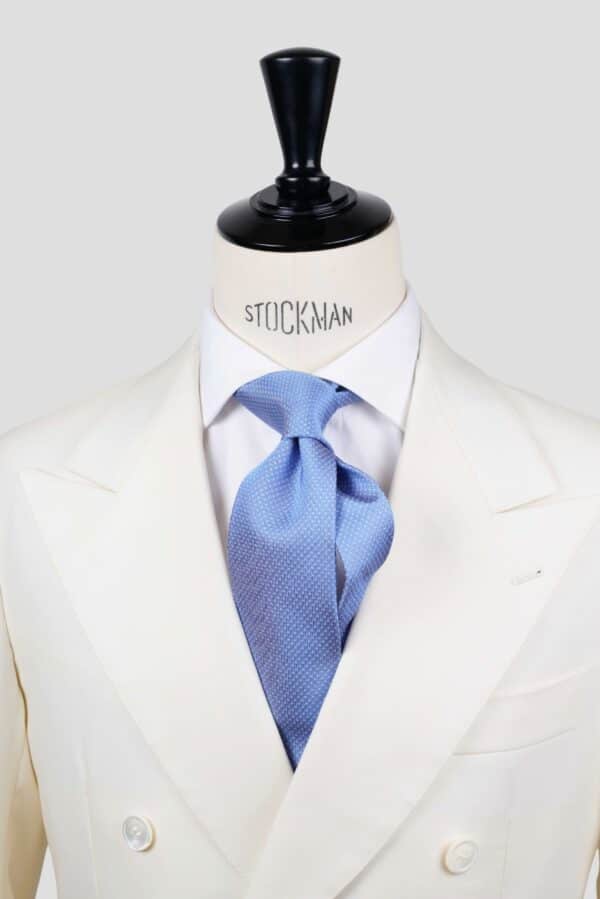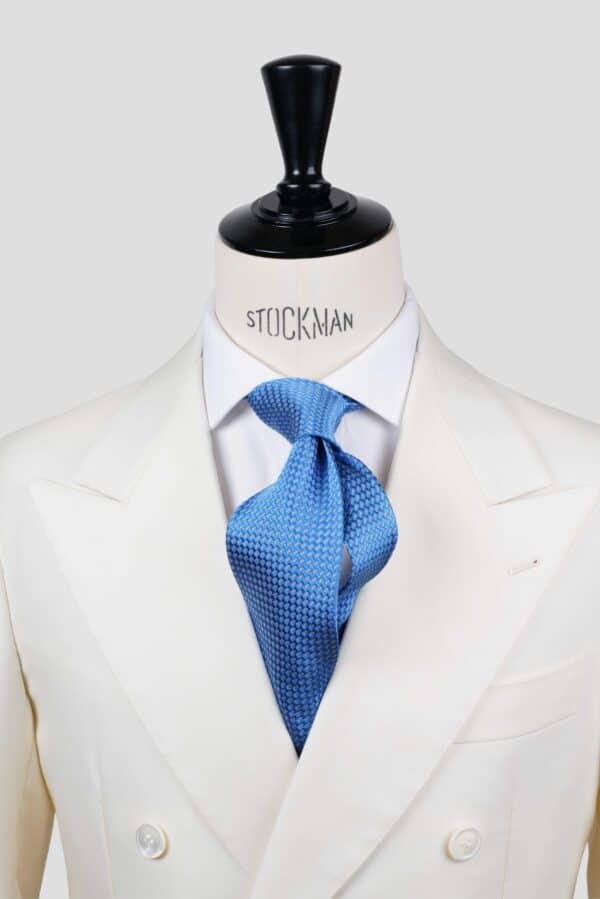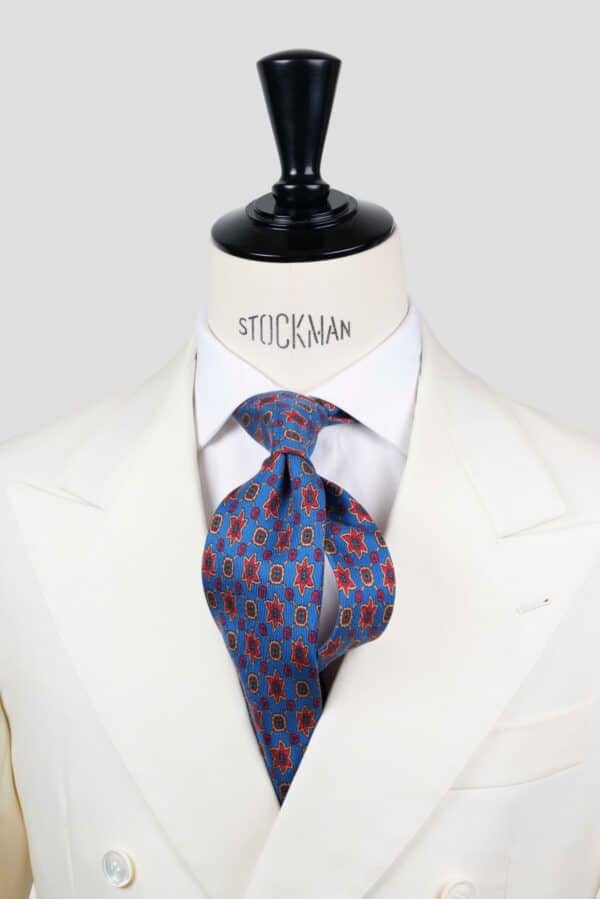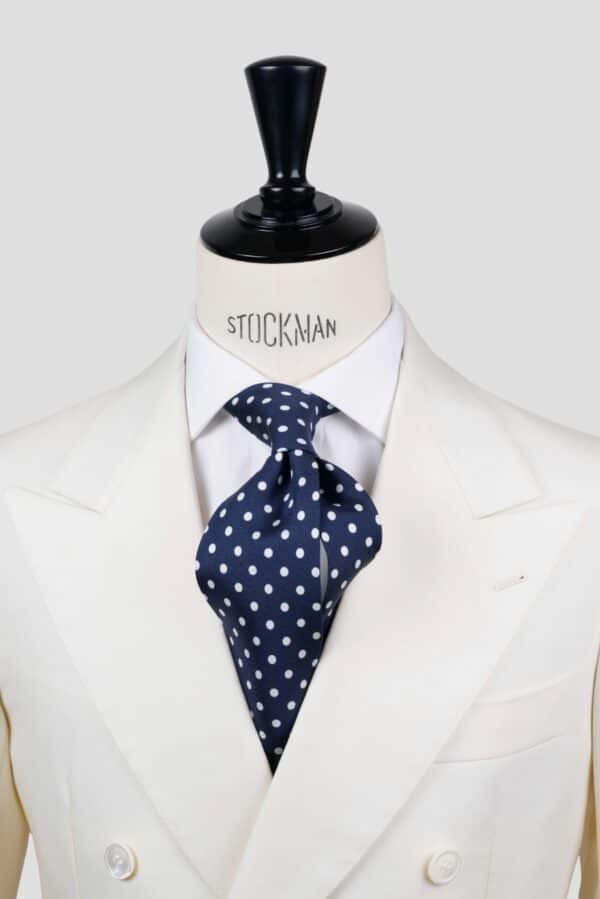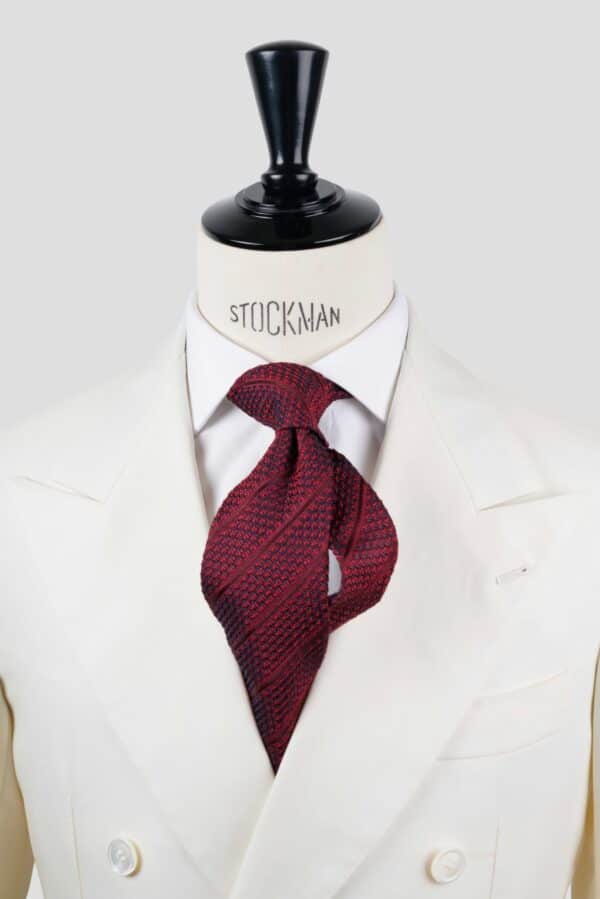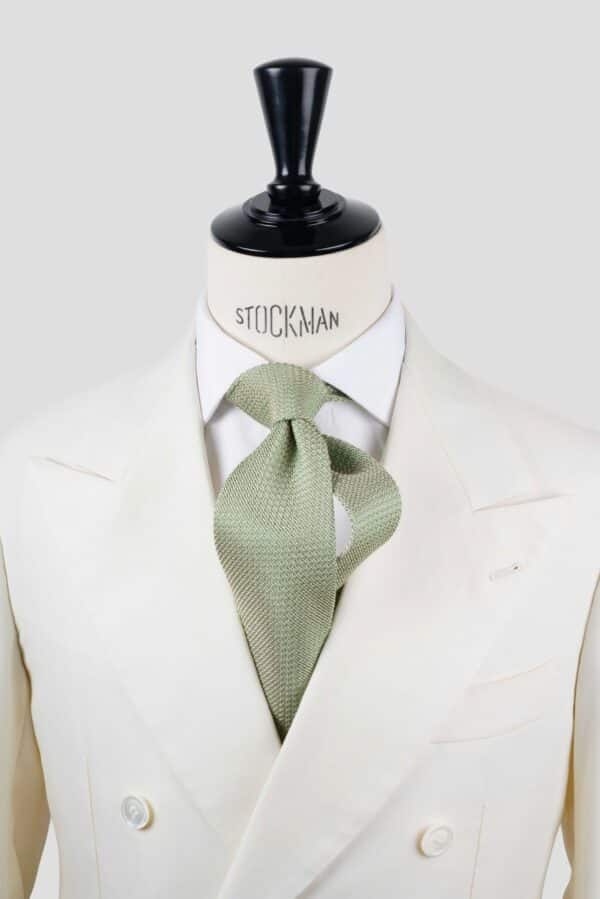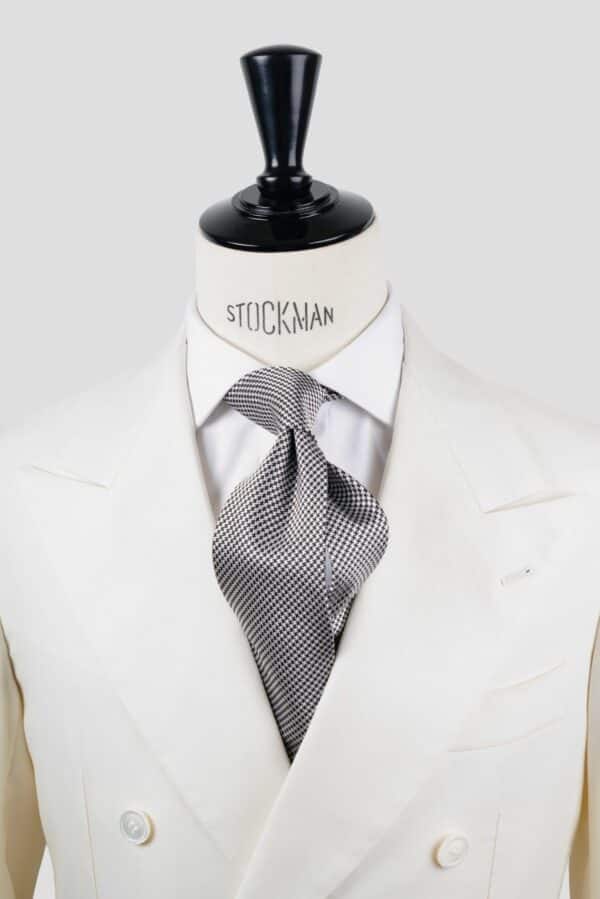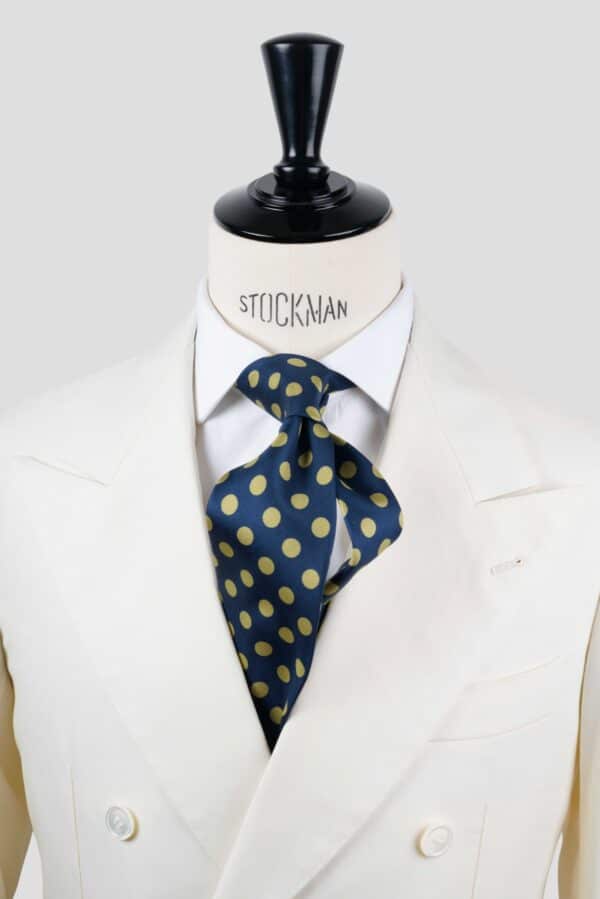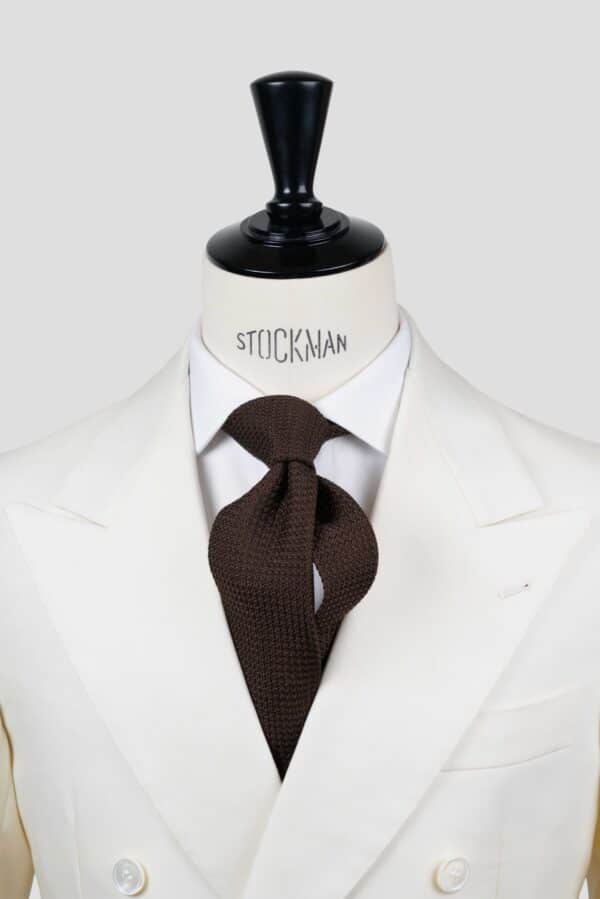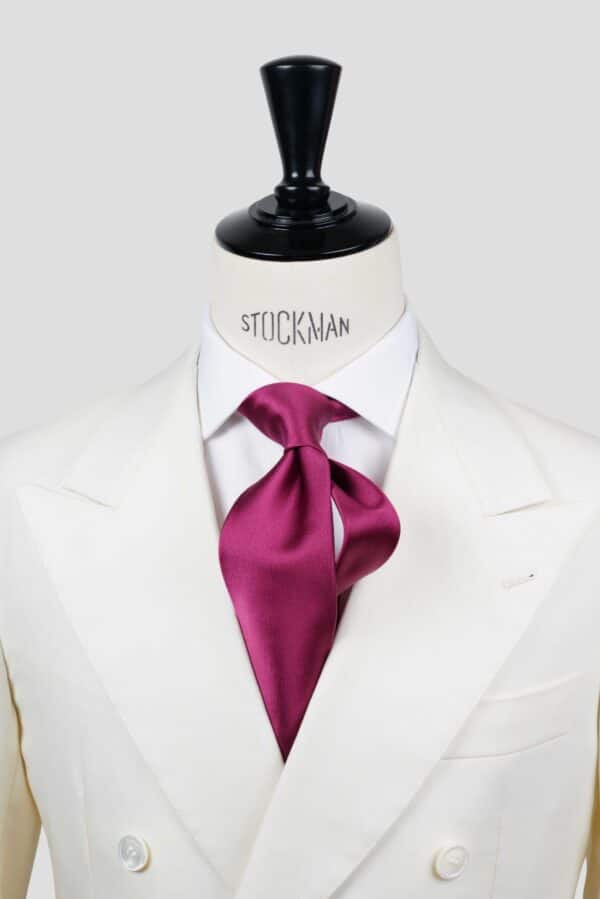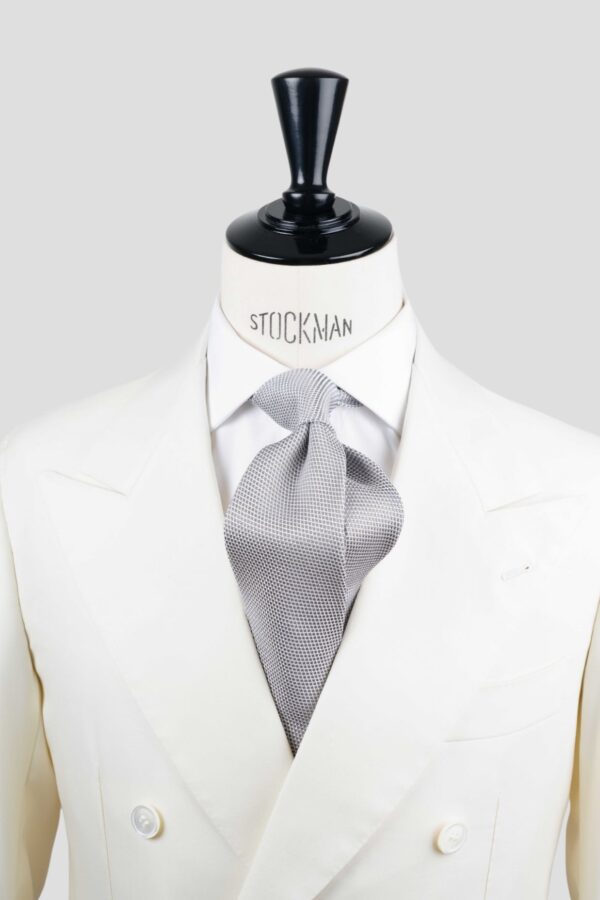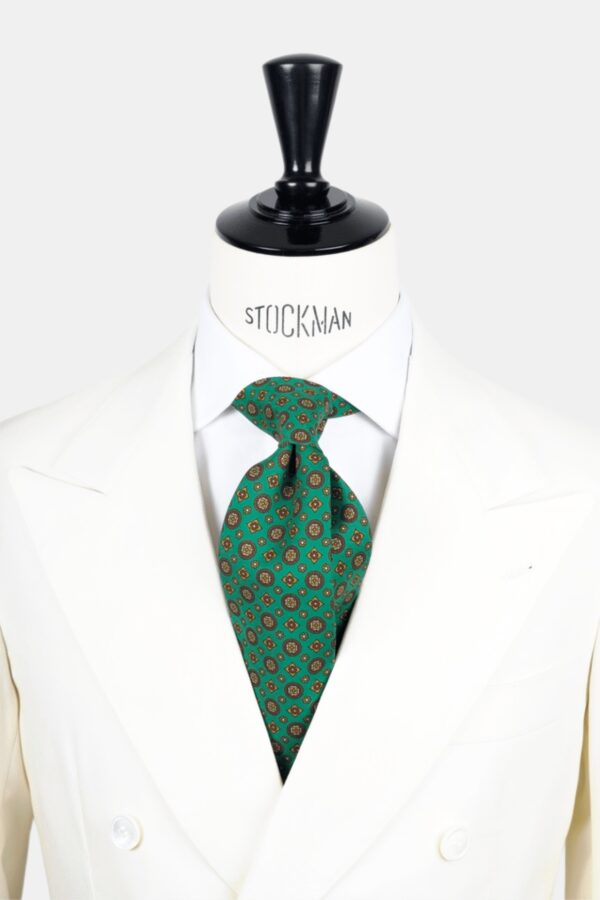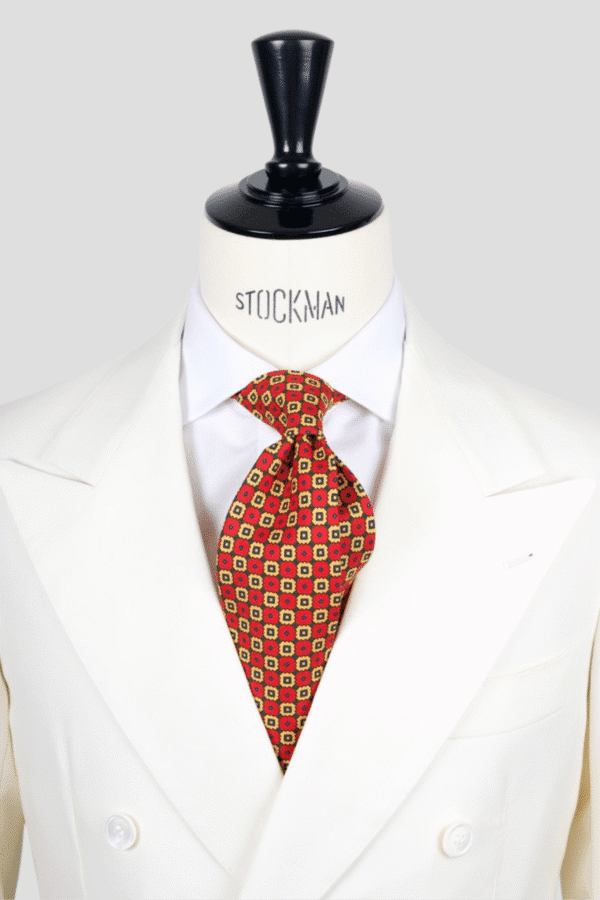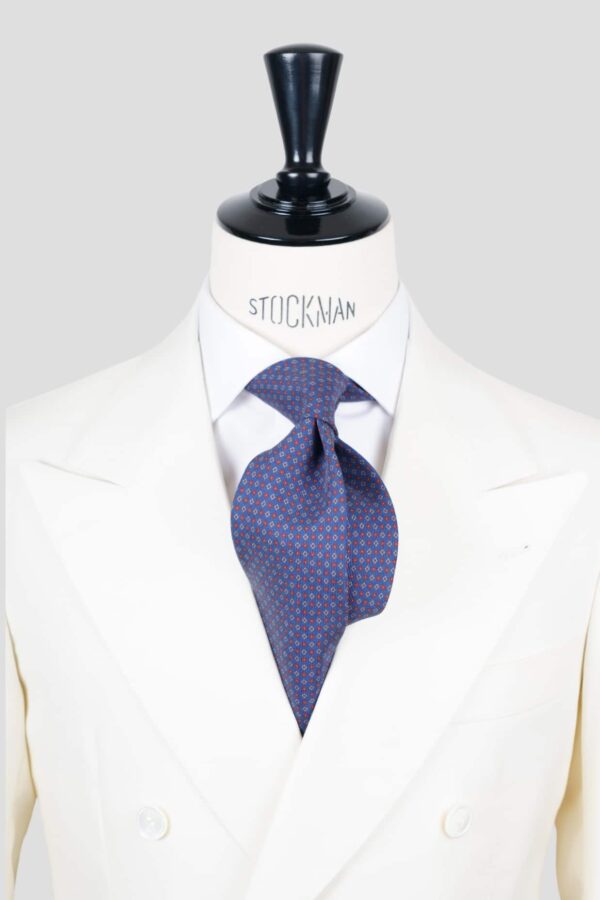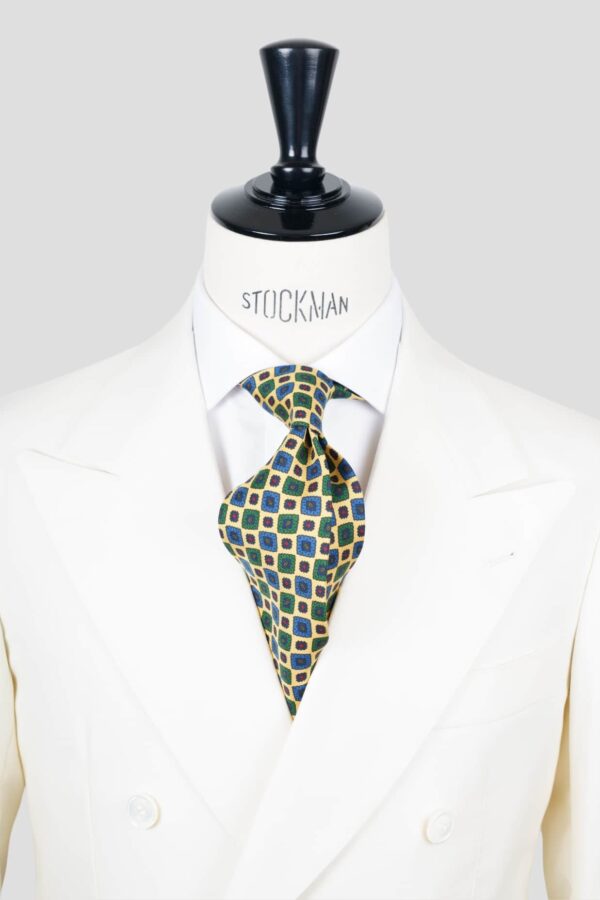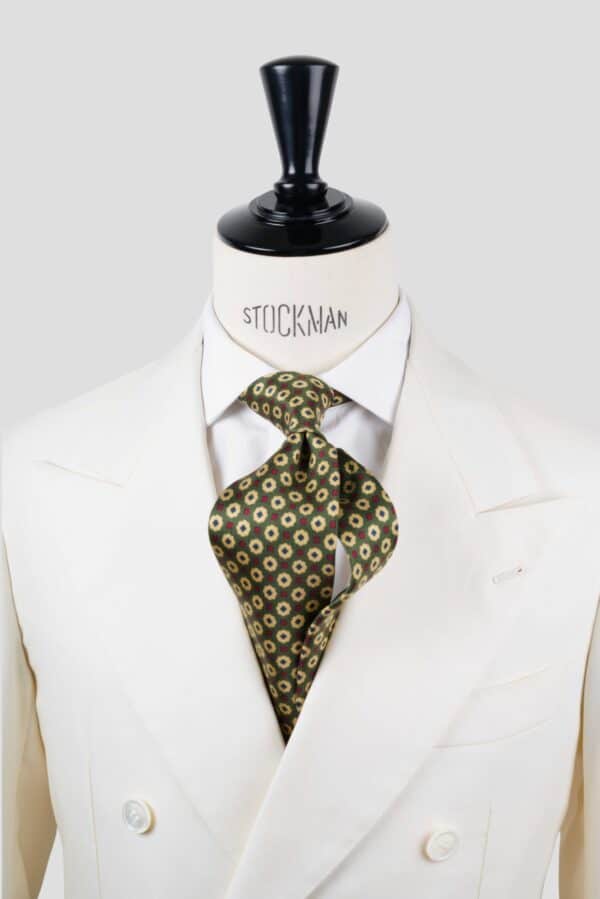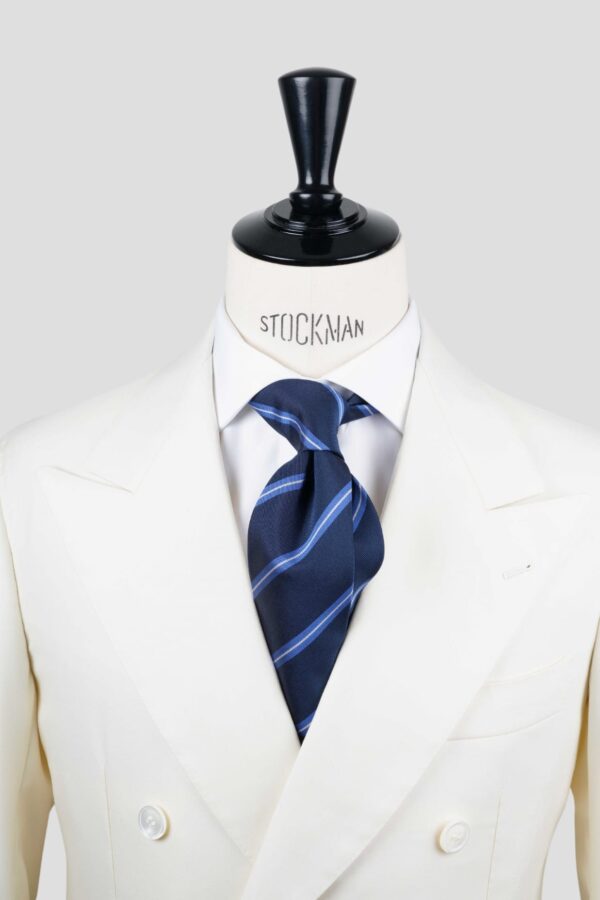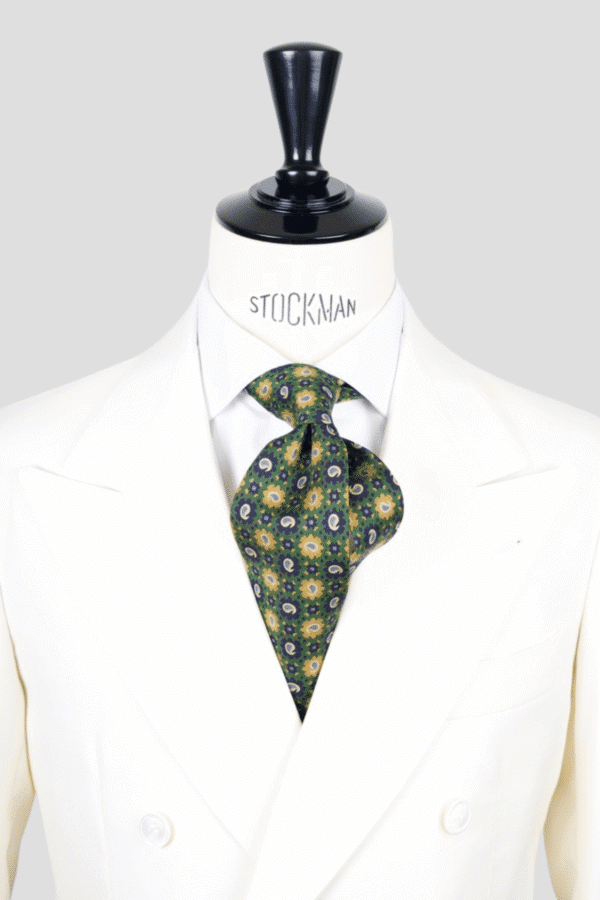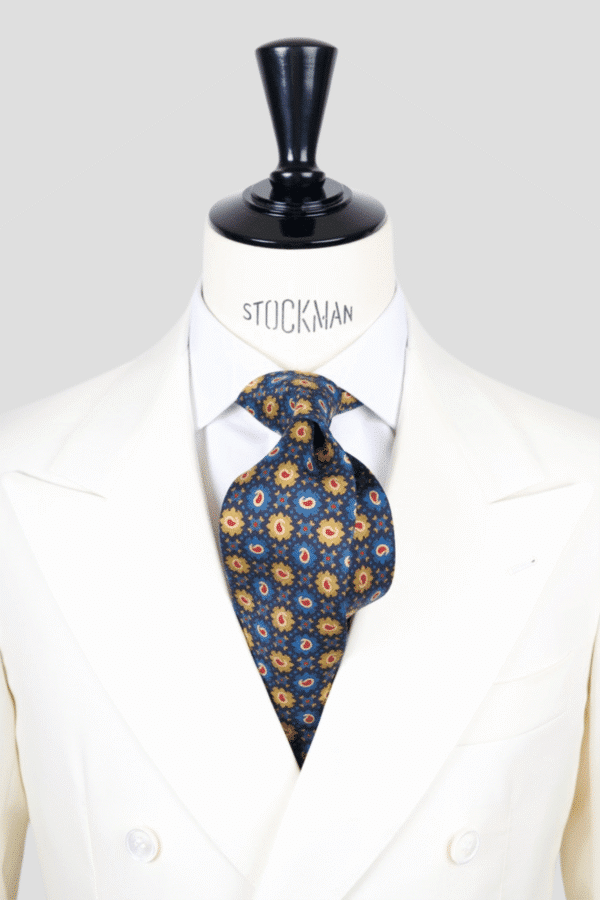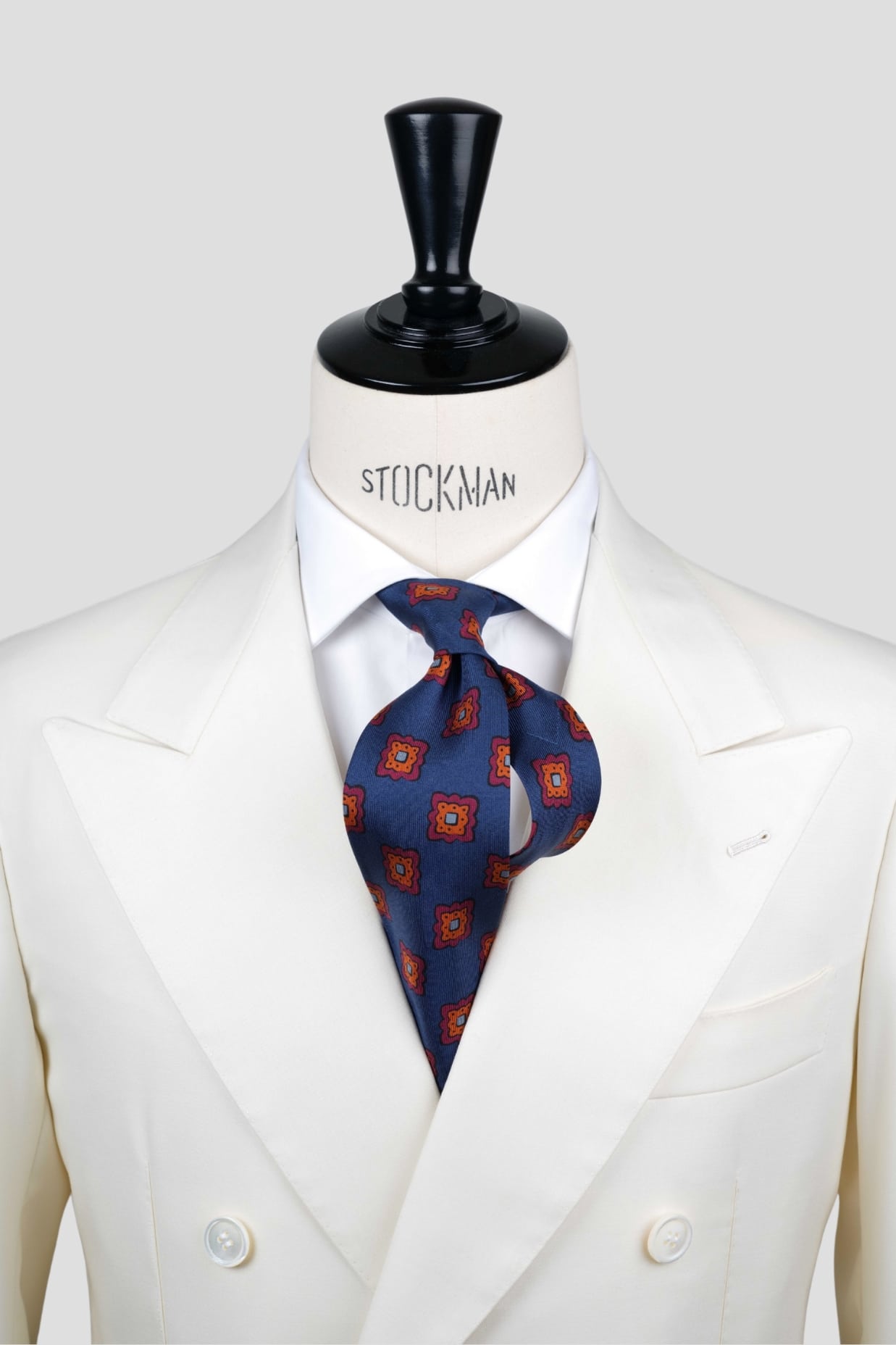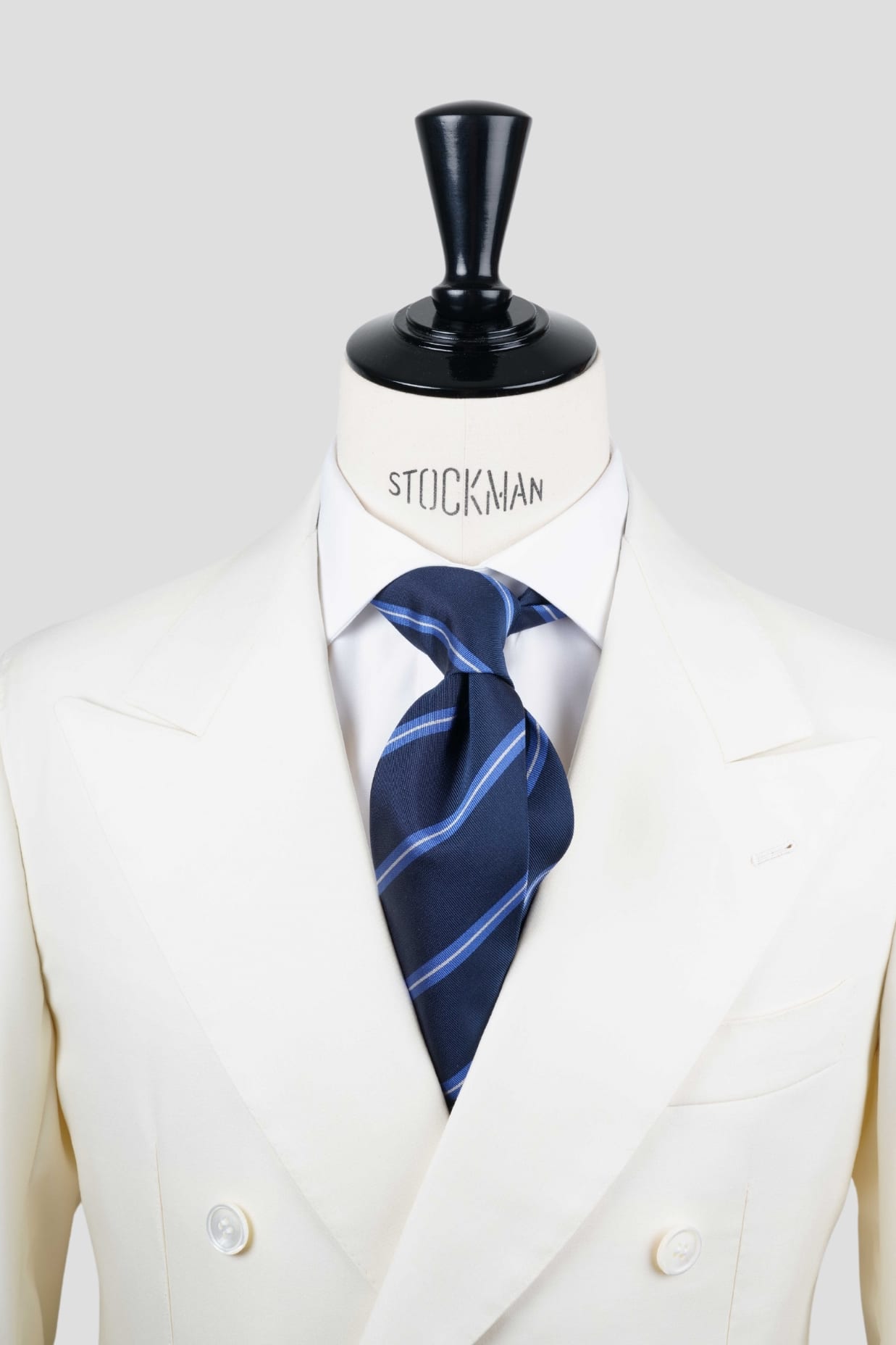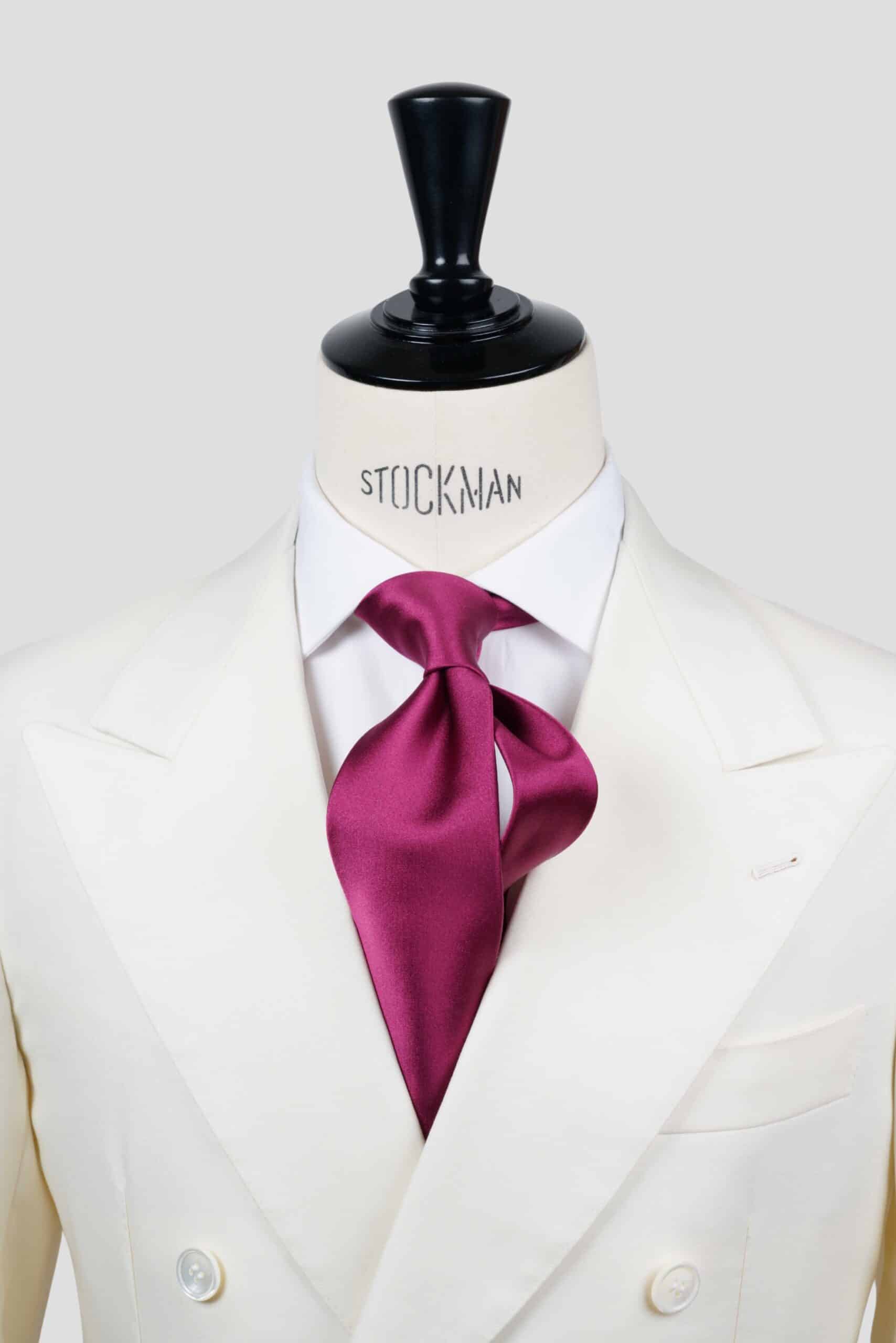

Luxury ties are recognized in hand, by four details that nothing can replace: a silk woven in the Lake Como region, a wool based interlining or a square of silk folded seven times, blades sewn by hand, and a dimple that holds under the knot all day long. This guide reviews each point, from the weave to the price, so that you know what you are paying for. A tie is worn by men and women alike: the criteria are the same.
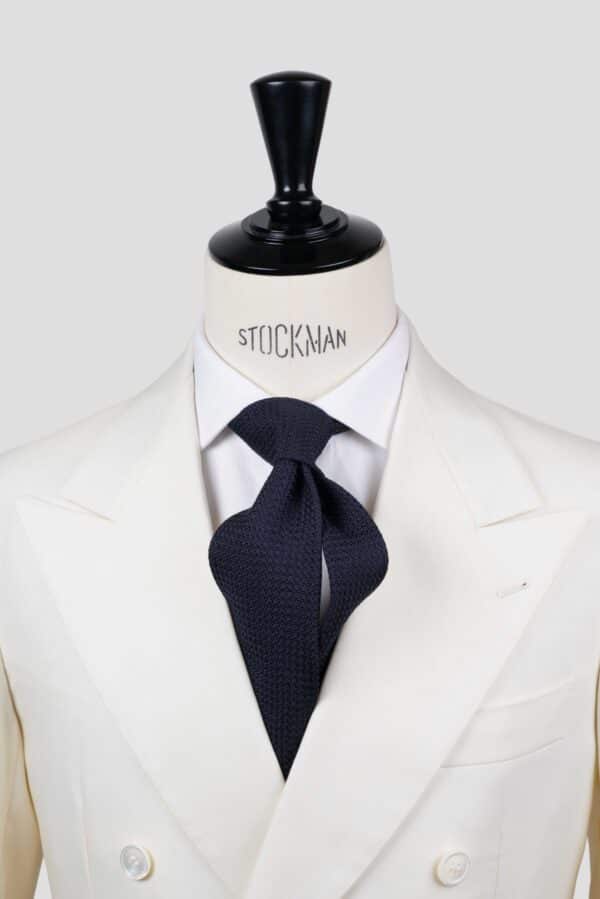
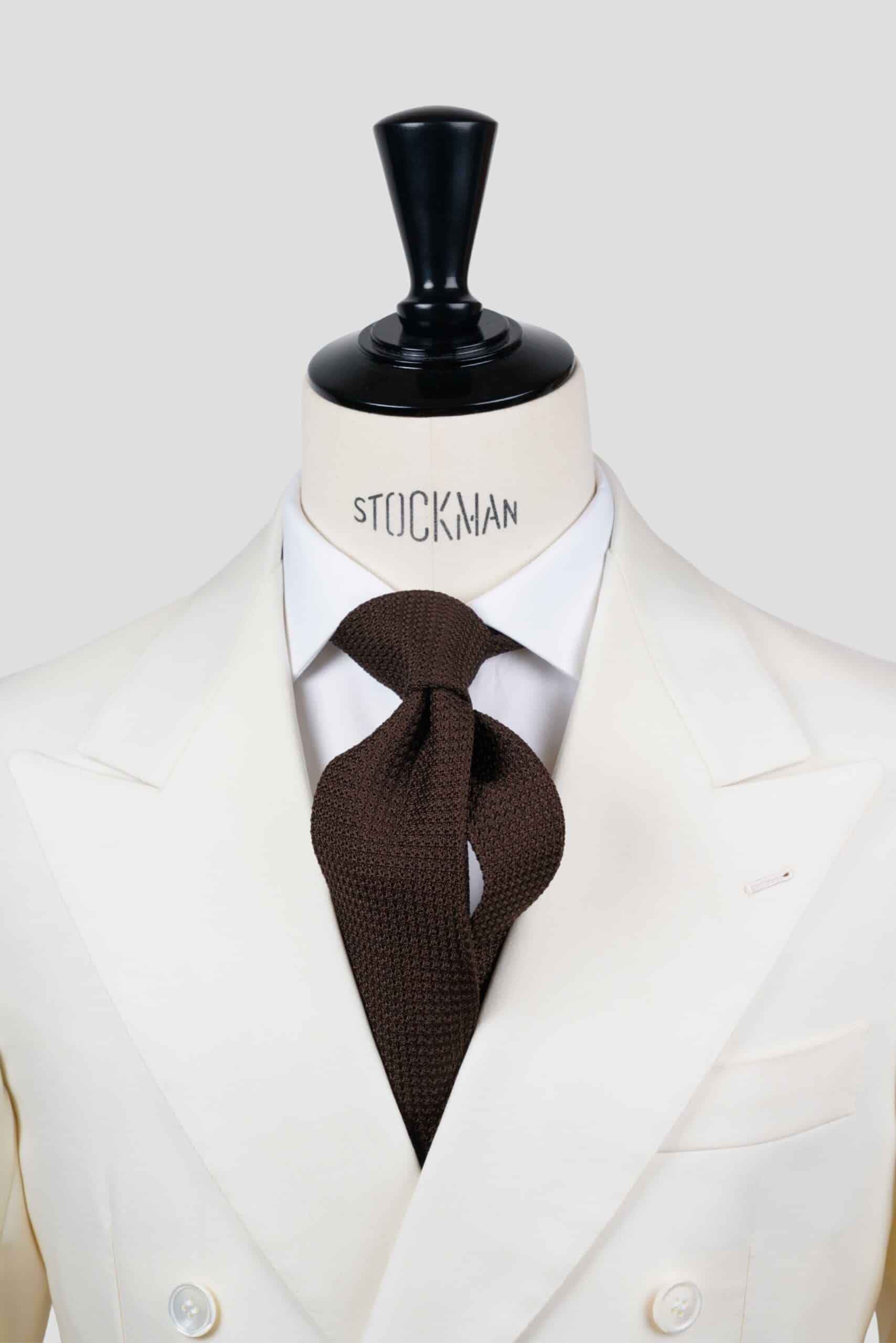
Everything starts with the shell, the visible silk. It comes in two large families. Printed twill is a smooth fabric, with fine diagonal ribs, on which the pattern is applied after weaving. Woven silk carries its pattern or its texture in the yarn itself: this is the case with jacquard, whose design is born from the interlacing of colored yarns, with grenadine, an airy gauze woven on shuttle looms, and with étamine, with its more open weave and visible grain.
The weave changes three things. The grain: a grenadine can be felt under the finger, a twill glides. The body: a woven silk is denser and hangs straighter. The hold of the knot: the texture grips, and the knot stays in place until evening.
One point deserves to be stated clearly: the thickness of a tie comes from the silk, not from the number of folds. The thickest ties are three fold ties in woven silk, grenadine or étamine. A seven fold tie in fine twill remains supple and light.
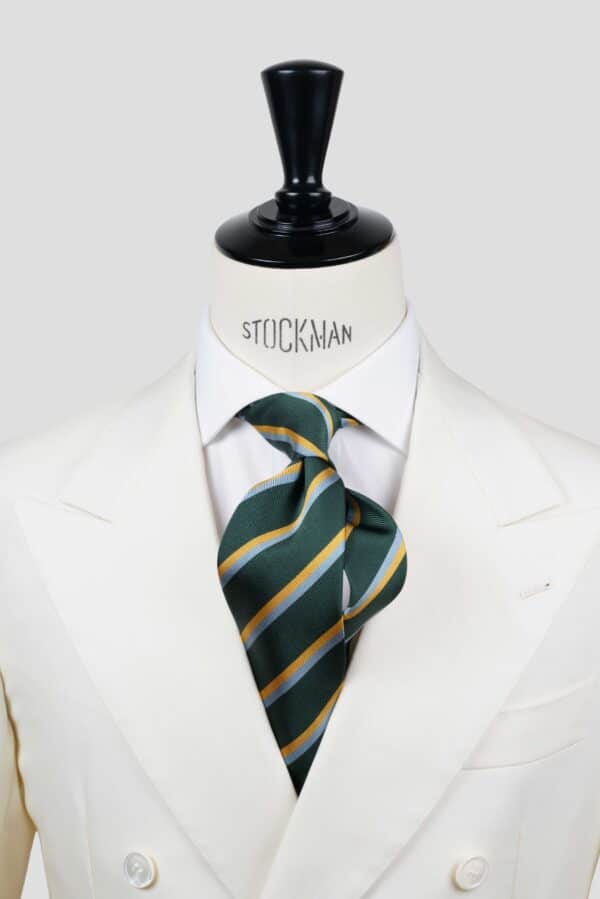
Printed twill is no second choice for all that: its quality is judged by the density of the weave, by the sharpness of the print seen on the reverse side, and by a deep, almost matte luster, with no satin shine.
Turn the tie over: what hides under the shell makes the difference between a piece that lasts and a piece that loses its shape in one winter.
A three fold tie is a silk shell folded three times around an interlining. On a luxury piece, this interlining runs the full length and rests on a wool base: it is what gives the spring and brings the tie back to shape once untied. The wide end and the narrow end are then lined by hand. At Dare in Paris, the three fold ties are sewn by hand in Paris, in a workshop holding the Fabriqué à Paris label.
A seven fold tie is cut from a whole square of silk, folded seven times onto itself. It is neither lined nor interlined: the body comes only from the accumulated silk. The wide end and the narrow end are hand rolled, like the edge of a silk square. This construction, which uses far more material, demands a flawless silk since nothing supports it. The Maison’s seven fold ties are sewn by hand in Italy.
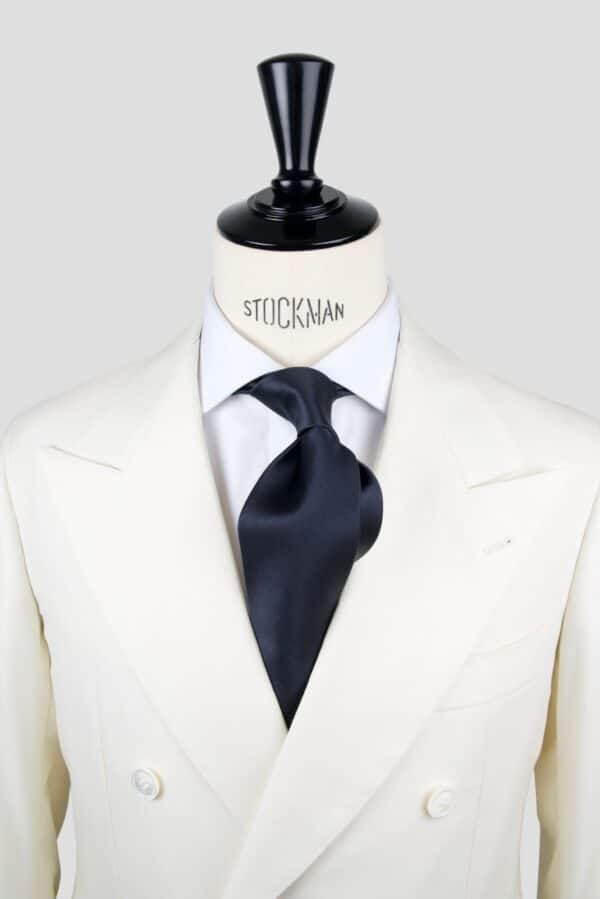
The three fold suits everyday wear: it holds the knot and creases little. The seven fold is chosen for its suppleness, its drape and a rounder knot. For a first luxury tie, the three fold is the safest choice. For a great occasion, the seven fold is the most beautiful.
Two seams are the signature of a handmade tie. They can be checked on the reverse side.
On the reverse side, at the level of the part that runs inside the shirt collar, a discreet seam stiffens the tie at that precise spot. This is the collar stitch. Once the collar is folded down over it, the tie no longer leaves the position you gave it: the knot stays centered all day without being retightened. This seam is not an industry standard, it is a signature of the Maison, and it can be checked with a finger by turning the tie over.
At both ends, on the reverse side, a raised seam closes the blades. This is the chenille bar tack, known in France as the bourdon chenillé. It is made with pure pearl silk thread, thrown in France. Silk throwing is not spinning: it consists in twisting several raw silk threads together to obtain a rounder, stronger thread. This operation was historically carried out in mills built on the banks of rivers, whose wheel drove the spindles. A bar tack in polyester thread, flat and shiny, can be spotted at a glance.
The dimple is the vertical hollow that forms under the knot, in the center of the wide end. It is made by pinching the silk just below the knot as you tighten it. On a poorly interlined tie, it collapses or does not form. On a quality tie, it holds all day: on a three fold thanks to the wool based interlining, on a seven fold thanks to the quality of the silk alone.
It is the simplest indicator, and the most honest: all it takes is a mirror. To form it correctly according to the chosen knot, the guide to tie knots details the gesture.
A luxury tie measures about 58 inches (147 cm) long, with a wide end of about 3.1 inches (8 cm) at its tip. The length determines where the tip falls once the knot is made: it should just touch the belt buckle. With 58 inches, a four-in-hand leaves a comfortable reserve for an average height, and a Windsor, which uses more fabric, remains possible for most heights: check that the tip reaches your belt before choosing it.
The 3.1 inch width is the classic one: it balances a standard jacket lapel and a spread or semi-spread collar. Narrower, the tie makes a smaller knot, which calls for a collar with short points. A serious house states these measurements on its product page: their absence is already a clue.
The price of a luxury tie does not pay for a logo. It covers three real costs. The Como silk, first: woven in short runs, it costs several times the price of a polyester or an industrial silk, and a seven fold uses far more of it than a three fold. The thrown thread, next: the pearl silk of the bar tack is a fine haberdashery thread, produced in small quantities in France. The hours of making, finally: interlining, lining, hand rolling, stitching the collar, sewing the bar tack, all of this is done by hand, piece after piece, by people trained for years.
Conversely, a tie sold at a low price with the words “Como silk” raises a simple question: on which of these costs was the saving made?
Undo the knot every evening, without pulling on the narrow end: a knot left in place deforms the interlining and marks the silk.
Silk cannot be machine washed and does not take water well. A stain only comes out with dry cleaning, at a cleaner who specializes in silk: water marks printed silk, leaves rings as it dries and makes the lining or the hem ripple. A crease is treated with a steamer held about 4 inches (10 cm) away, never with an iron placed directly on the silk. Store the tie flat or loosely rolled, away from light.
Five signs should make you hesitate.
Dare in Paris is an online Maison based in Paris. Its ties are sewn by hand, in Paris for the three fold and in Italy for the seven fold, in a silk woven in the Lake Como region. Point by point:
The models are gathered in the silk tie collection. Shipping is free in metropolitan France from 200 euros, and worldwide from 350 euros.
The three fold is folded three times around a wool based interlining, then lined: it holds the knot and creases little. The seven fold is born from a square of silk folded seven times, with no lining or interlining: it is more supple, lighter and requires more silk. The thickness, for its part, depends on the silk chosen, not on the number of folds.
About 3.1 inches (8 cm) at the wide end remains the reference width: it goes with most lapels and collars. Go narrower only if your jacket has slim lapels and your collar short points. When in doubt, 3.1 inches never goes out of style.
Never with an iron placed directly on the silk: the heat glazes the fabric and crushes the interlining. A crease is treated with a steamer held about 4 inches (10 cm) away. Untied every evening and stored flat, a well interlined tie recovers its shape on its own.
Three are enough: a plain or small patterned navy for the office, a dark woven silk for ceremonies, a freer printed one for everything else. Better three well made pieces than a dozen that cannot hold a dimple.
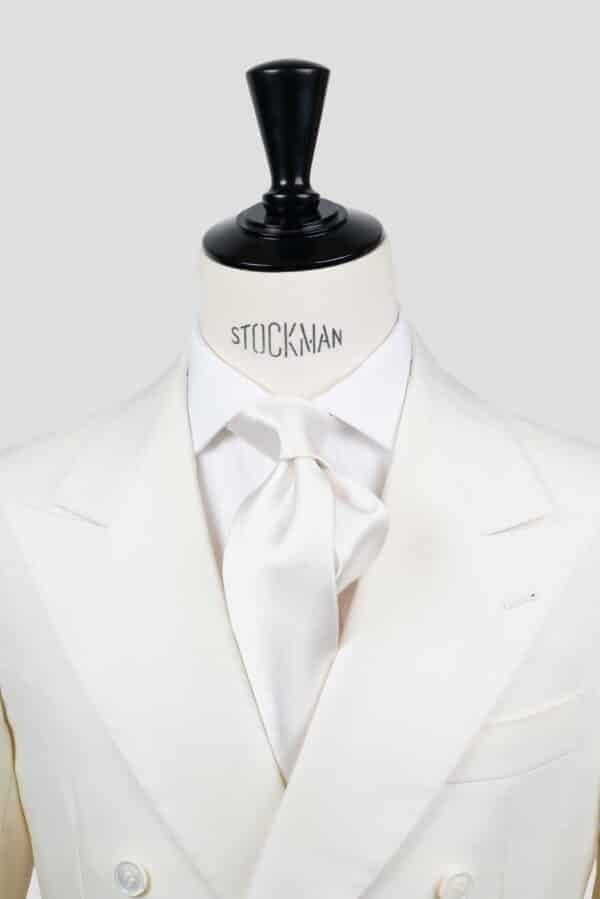
For a daytime wedding, a plain or discreetly patterned silk tie, tied in a half-Windsor on a classic collar, or in a Windsor if the collar is a wide spread. If the invitation says black-tie, the tie stays in the closet: the code calls for the black bow tie, tied by hand. White-tie, rarer, calls for a white bow tie.
From the workshop
Sewn by hand, in Paris for the three fold and in Italy for the seven fold, in pure silk twill woven in the Lake Como region.

Service client disponible 7j/7.
Delivery within 48 hours in France, from 3 business days abroad.
Returns within 14 days. En savoir plus.