How to tie a silk scarf: 10 ways to wear it
Ten ways to tie a silk scarf, from the Parisian knot to the headband and the bag handle, with step by step instructions, a format guide and care advice from the Paris workshop.
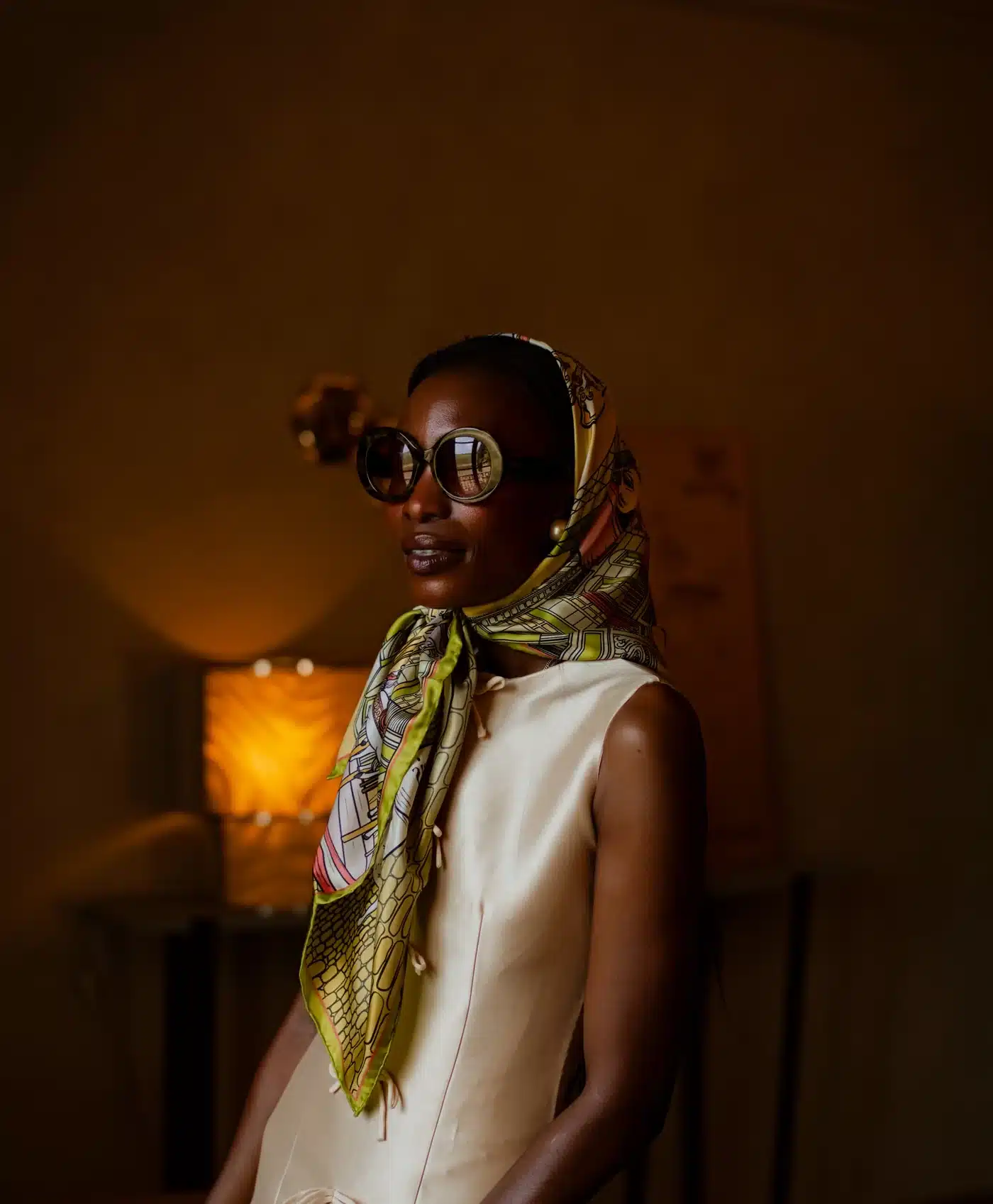
Learning how to tie a silk scarf comes down to three moves: fold it, place it, close it. Everything else, from the drape to the volume at the neck, depends on the format of the piece and the suppleness of the silk. Here are ten ways to wear one, from the simplest loop to the most worked knot, with step by step instructions for each, whether you are working with a square, a long scarf or a tube scarf.
Before you tie: three things that change everything
The format decides the knot
A square and a long scarf do not tie the same way, and trying to tie a rectangular piece as you would a square always gives a thick, badly draped result. The square folds into a triangle, then into a band, wide or narrow. It suits structured knots, around the neck as much as in the hair. The large 90 cm (35 inches) square is the most complete format: folded on the bias, it ties as close to the neck as a small square, and it also allows the shawl and the double wrap. The long scarf, rectangular, folds along its length. It goes around the neck without effort and gives a vertical drape that lengthens the silhouette. The tube scarf, narrow and long, slips under an open collar or ties short. It is the easiest piece to wear every day, because it never creates volume.
Folding on the bias is half the work
Always fold a square starting from the diagonal, never from the sides. Bring one corner over the opposite corner to form a triangle, then fold the base toward the point, two or three times, until you have a band of the width you want. This bias fold gives a supple band that follows the neck, where a straight fold stays stiff and marks sharp creases.
Silk slips: tie it looser than you think
Silk twill is fluid and alive. A knot pulled tight like a shoelace crushes it and flattens the drape. Close the knot just enough for the piece to hold, then let it settle on its own: it finds its drape within a few minutes of wear.
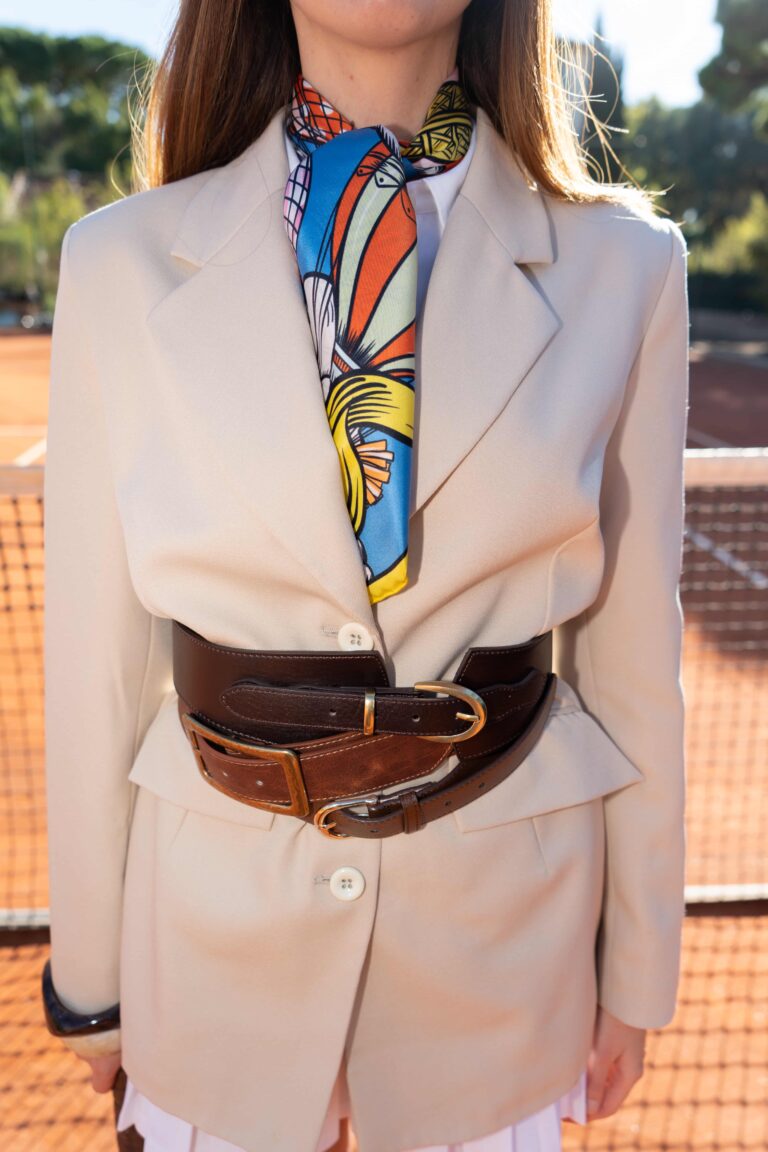
How to tie a silk scarf around the neck
01 The Parisian knot
The fastest, and probably the most worn. Also called the European loop, it works with a long scarf as well as with a square folded into a band.
- Fold the scarf in half along its length. A loop forms at one end, the two free ends at the other.
- Place it around your neck, the loop on one side, the two ends on the other.
- Pass both ends together through the loop.
- Slide the loop upward to adjust the height.
Leave the loop slightly off center rather than in the middle of the throat: the knot looks worn, not placed.
02 The simple loop
The shortest move, the one that goes with an open coat and a fine sweater.
- Place the unfolded scarf around your neck, both ends in front, at uneven lengths.
- Take one end behind the neck for a full turn.
- Bring it back to the front and let both ends fall freely.
The asymmetry does all the work: one end clearly longer than the other breaks the line and avoids the look of a sports scarf.
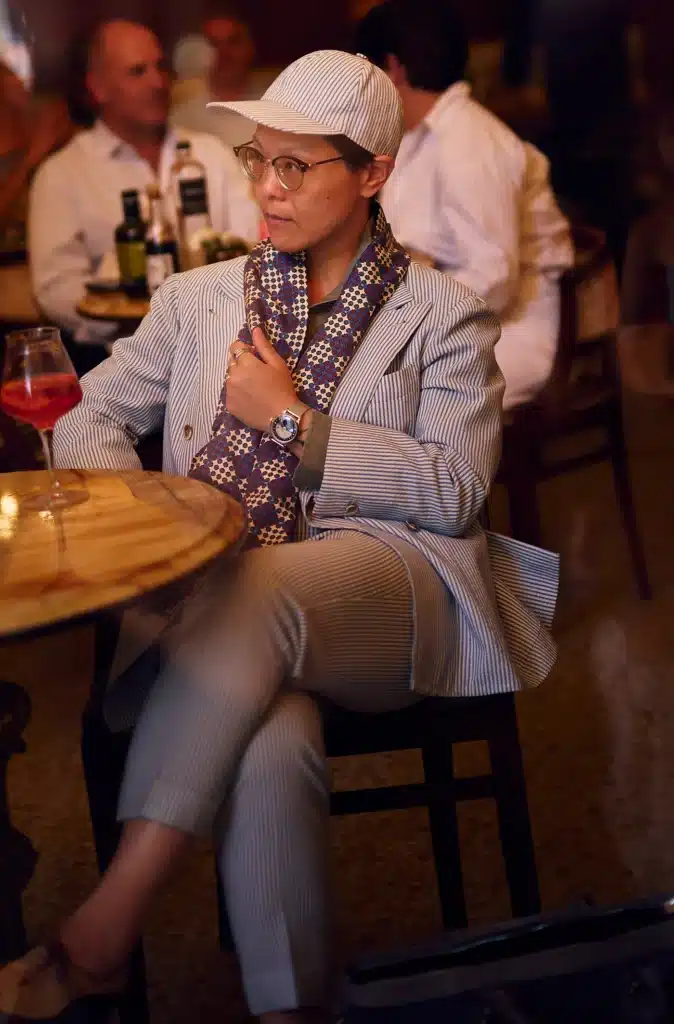
03 The cross knot, or pretzel knot
A variation on the Parisian knot, more built, which holds better in deep cold.
- Fold the scarf in half along its length and place it around your neck, the loop on one side.
- Pass the first end through the loop, from underneath.
- Pass the second end through the loop, from above, in the opposite direction.
- Adjust both ends so they fall at different heights.
The crossing creates a small relief at the center that keeps the warmth in and gives body to a fine silk.
04 The ascot style
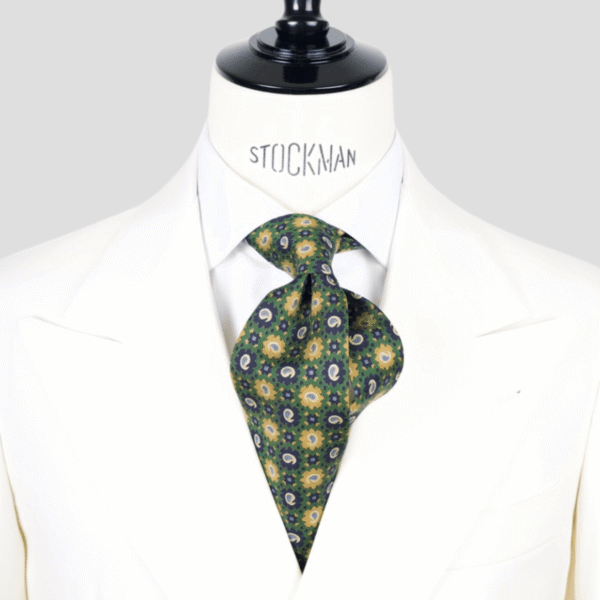
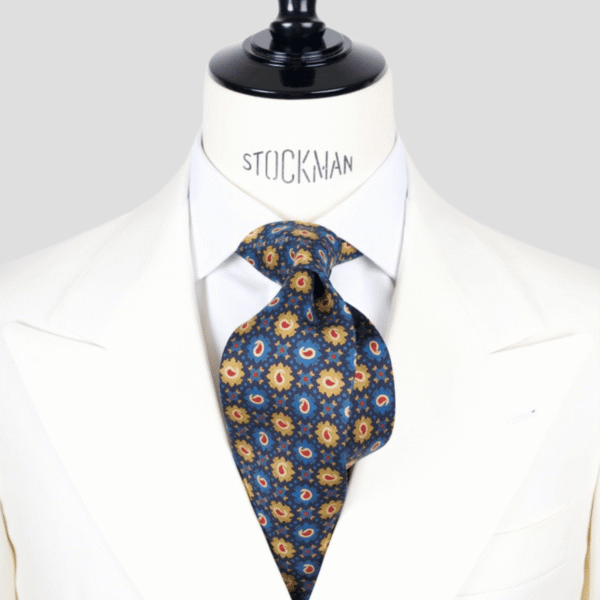
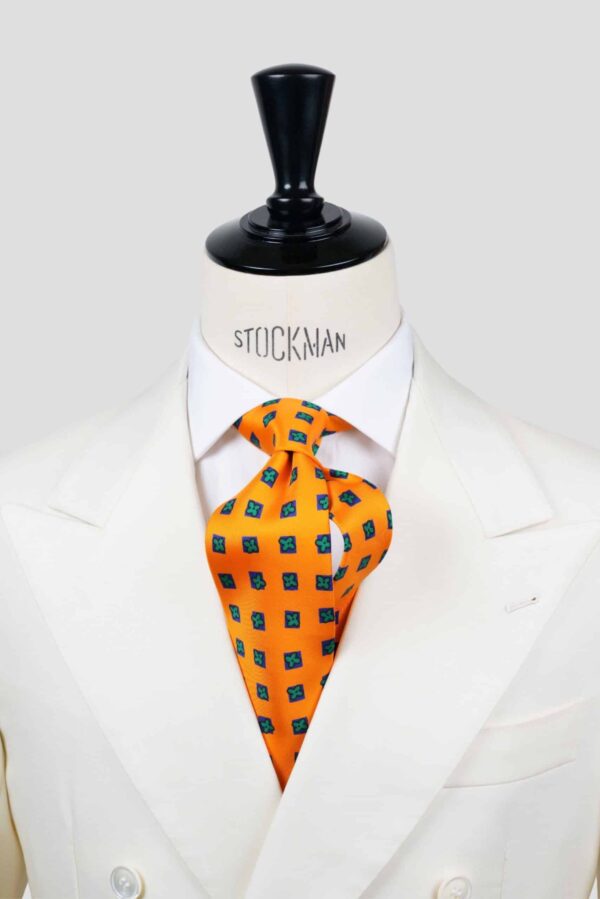
The dressiest knot of the series: the ascot knot, or lavallière as it is called in Paris. It asks for a long, supple scarf and is worn with an open shirt collar.
- Place the scarf around your neck, one end about 20 cm (8 inches) longer than the other.
- Cross the long end over the short one, then pass it underneath and bring it out at the top, like the first move of a necktie knot.
- Form a soft loop with the short end, then pass the long end over it and tuck it into the loop.
- Barely tighten, and spread the ends by hand to open the knot.
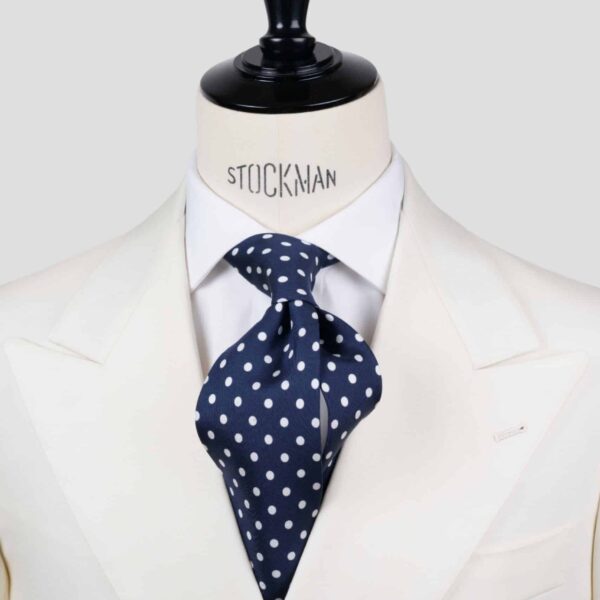
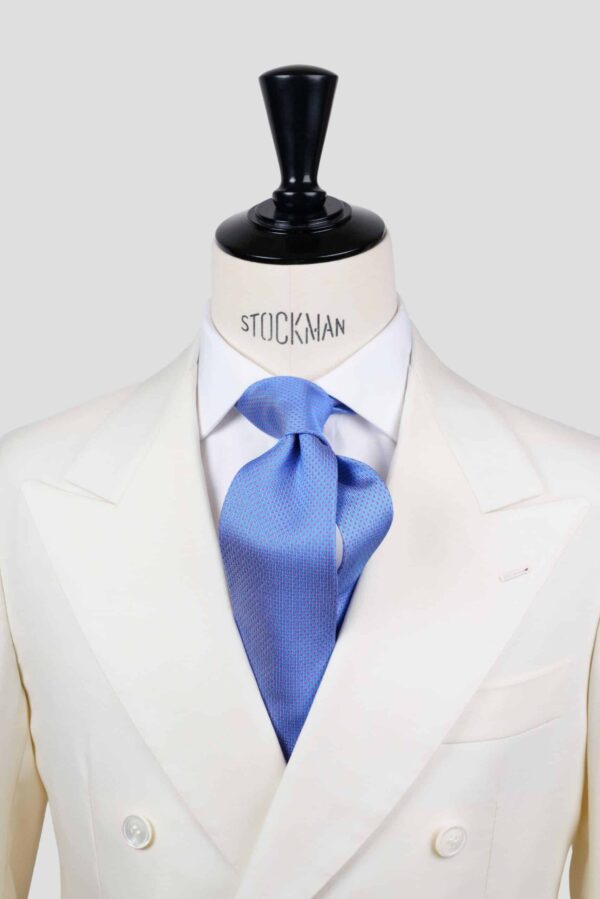
The ascot wants some softness. A knot that is too neat looks like a failed necktie; a loose, open knot gives it its look. If you want a clean, closed line instead, turn to a silk tie.
How to tie a square silk scarf
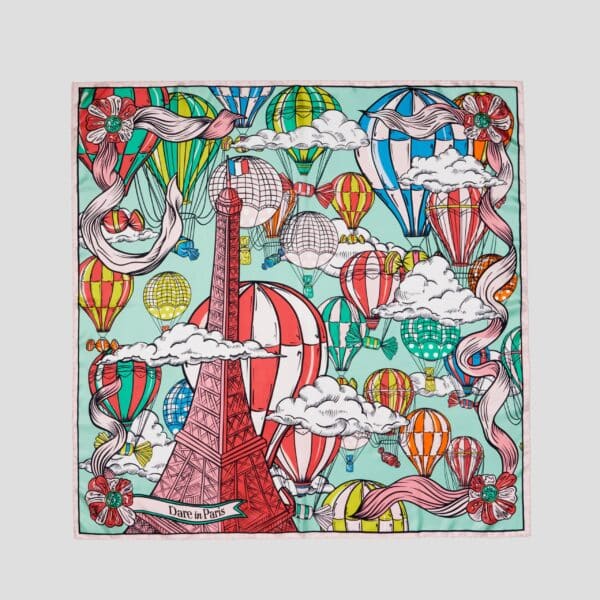
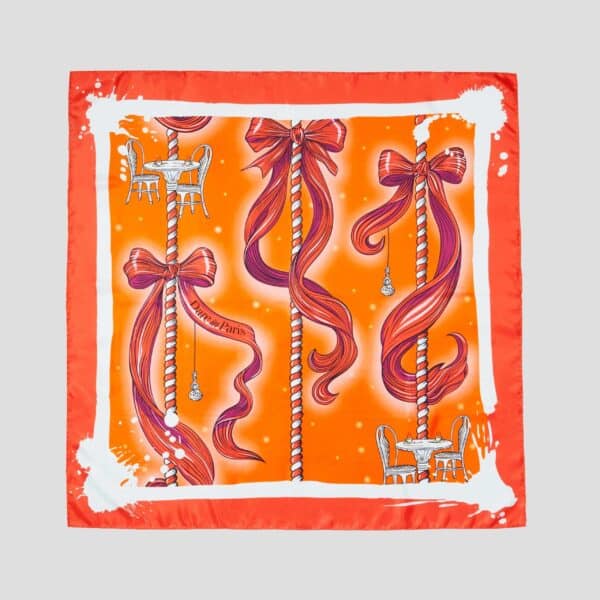
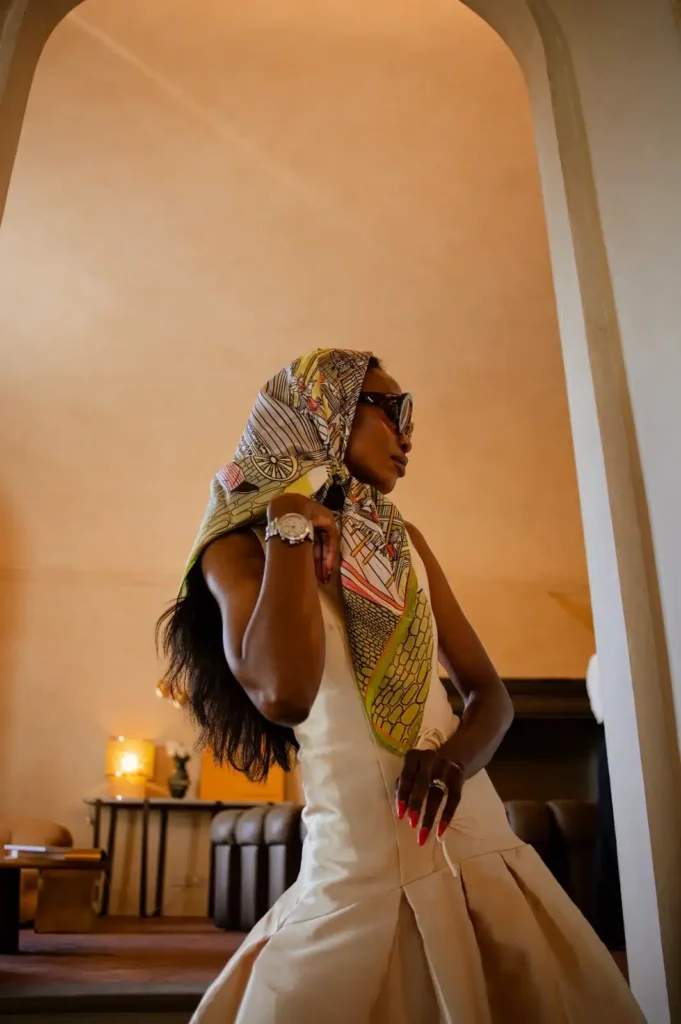
The square is the most versatile piece in the wardrobe, and the most intimidating. Three knots are enough to cover almost every occasion. For the large 90 cm square, our guide how to wear a silk scarf shows six ways to wear it: around the neck, as a shawl, on the head and in the hair, on the wrist and on a bag.
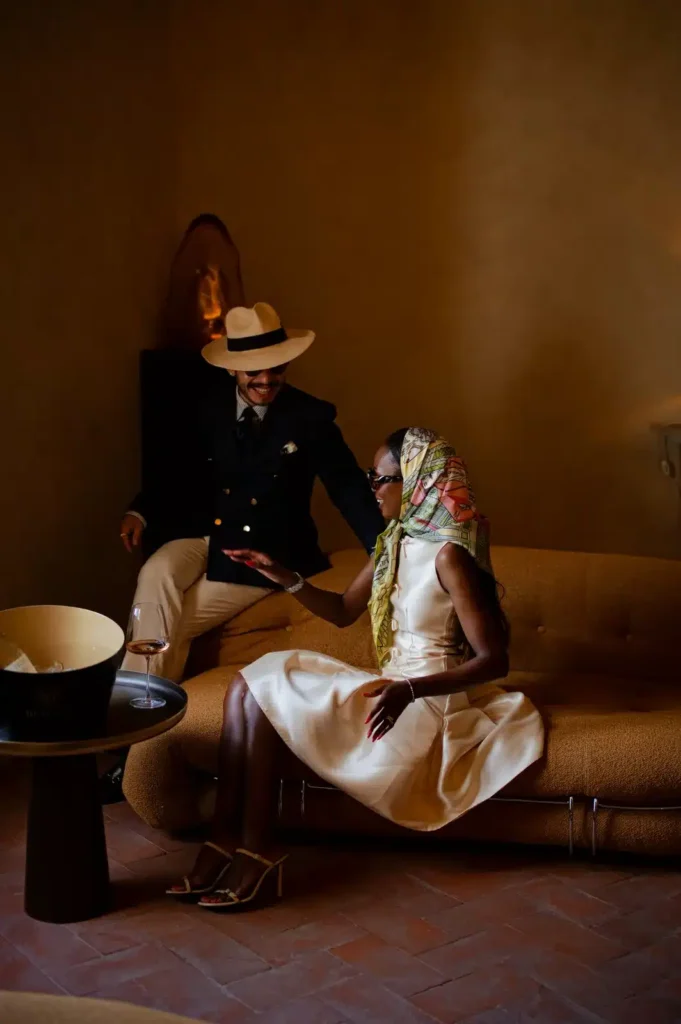
05 The triangle
The most obvious, and the one that shows off a print best.
- Fold the square in half on the diagonal to get a triangle.
- Place it on your shoulders, the point toward the front, at the center of the chest.
- Cross the two side points behind the neck.
- Bring them back to the front and tie them discreetly under the point, or simply let them fall.
On a large square, the same move gives a shawl: rest the triangle on the shoulders rather than close to the neck, and tie the points low in front.
06 The necktie knot
A clean vertical line that works as well on a white shirt as on a plain dress.
- Fold the square into a triangle, then fold the point toward the base and fold again until you have a band of 4 to 6 cm (1.5 to 2.5 inches).
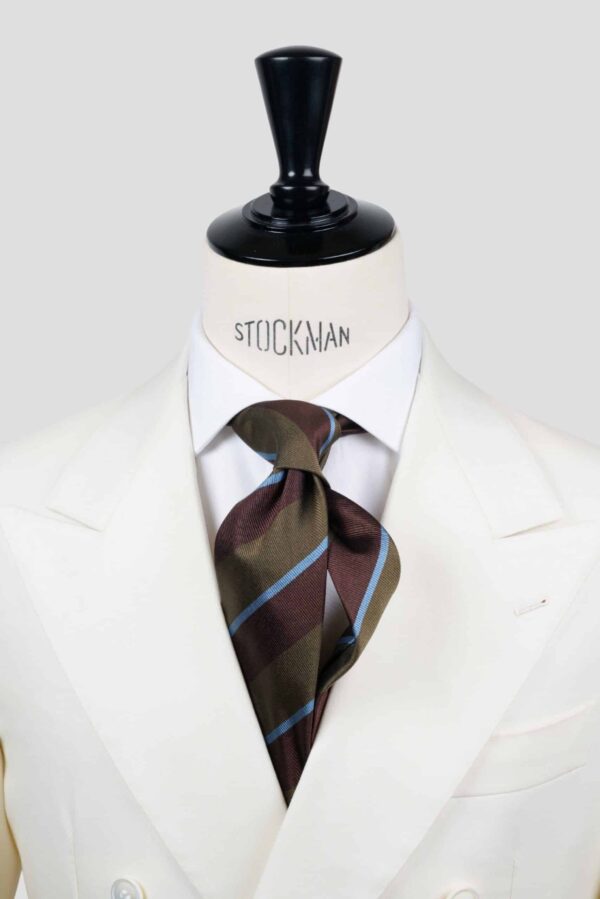
- Place the band around your neck, one end longer than the other.
- Tie a simple knot with the long end around the short end.
- Pass the long end through the loop you have just formed and tighten gently as you slide the knot up.
The result should stay supple. Unlike a necktie, this knot is not pulled against the collar.
07 The rolled choker
The shortest knot, for the days when the scarf stands in for jewelry.
- Fold the square into a triangle, then roll it on itself starting from the base, until you have an even rope.
- Wrap this rope two or three times around the neck, fairly close.
- Tie the two ends on the side with a square knot, or slip them under the wraps to make them disappear.
This knot asks for a tightly rolled rope: a loose roll would make a thick volume around the neck. Our silk scarves, printed on silk twill and then hand rolled in our Paris workshop, lend themselves particularly well to this roll, because the hand rolled hem keeps its volume instead of flattening.
How to tie a silk scarf in your hair
08 The headband
The classic silk headband, and the quickest way to dress hair that is pulled back.
- Fold the square into a triangle, then into a band of 3 to 5 cm (1 to 2 inches).
- Place the middle of the band at the top of the forehead, at the hairline.
- Bring both ends behind the head and cross them at the nape.
- Tie on the side, below the ear, and leave the ends free.
Tying on the side rather than at the back avoids the knot that gets in the way as soon as you lean back, and gives a less severe result.
09 The ponytail ribbon
The ponytail scarf: a ribbon that hides the elastic and moves with the hair.
- First tie the hair with a thin elastic, in the color of the hair.
- Fold the square into a narrow band.
- Wrap the band twice around the elastic, hiding it completely.
- Tie, and let both ends fall along the ponytail.
Silk twill slides over hair: that is precisely what avoids the break a bare elastic leaves.
How to tie a silk scarf on a bag
10 The bag handle knot
The simplest knot of all, and the one that transforms a plain bag fastest.
- Roll the square into a rope, as for the rolled choker.
- Pass it under the handle, at the base of the strap.
- Tie a simple knot, then a second one in the opposite direction: together they form a square knot that will not slide.
- Let the two ends fall at uneven lengths, or wind them around the handle.
On a thin handle, fold the square into a narrow band before tying: an end that is too wide would create volume that gets in the way of the hand.
Silk scarves for men
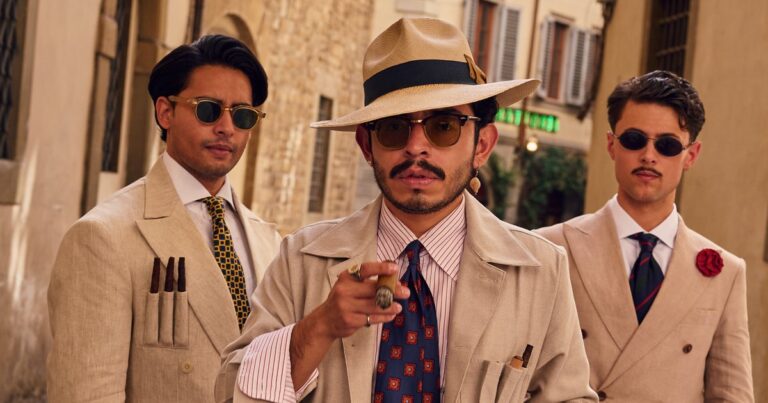
A scarf has never been an accessory reserved for women, and the knots described above work identically for everyone: the pieces are worn by men and women alike. Three uses come up most often.
Under an open shirt collar: a tube scarf slipped straight under the collar, without a knot, simply crossed. The most discreet move, and the easiest to wear at the office.
The Parisian knot with a coat: a long scarf, folded in half, passed through its own loop and pushed up under the collar. The piece holds all day without coming undone.
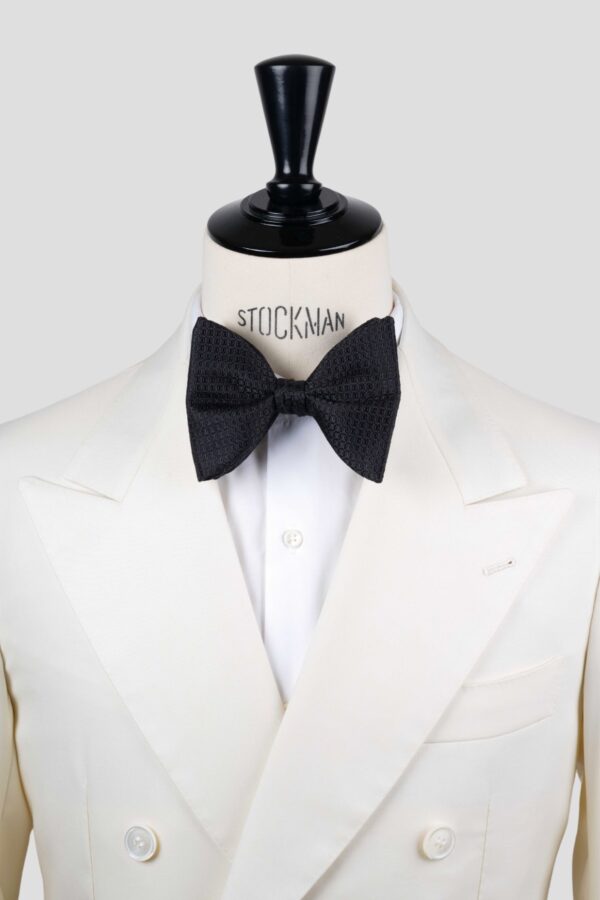
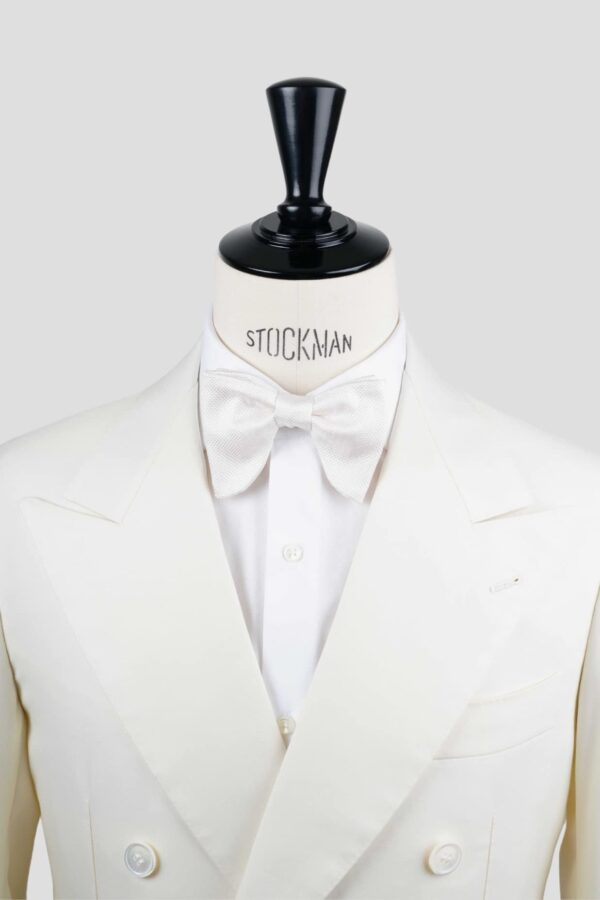
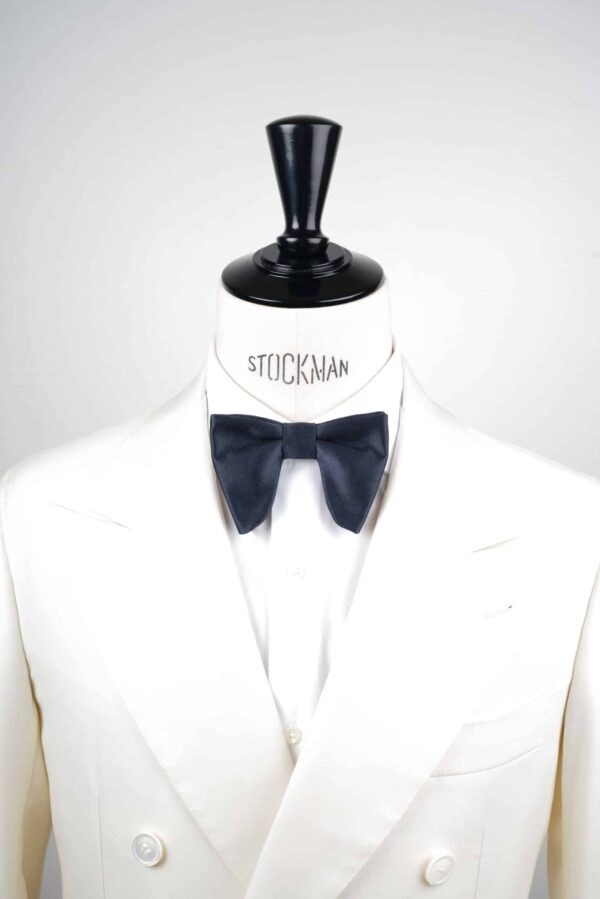
The ascot style for an event: an open collar, a deliberately loose knot, a printed silk. The alternative to a tie when the outfit asks for presence without the formality of a dress code. As soon as the evening turns black tie, the scarf gives way to the silk bow tie, which is worn by men and women alike as well.
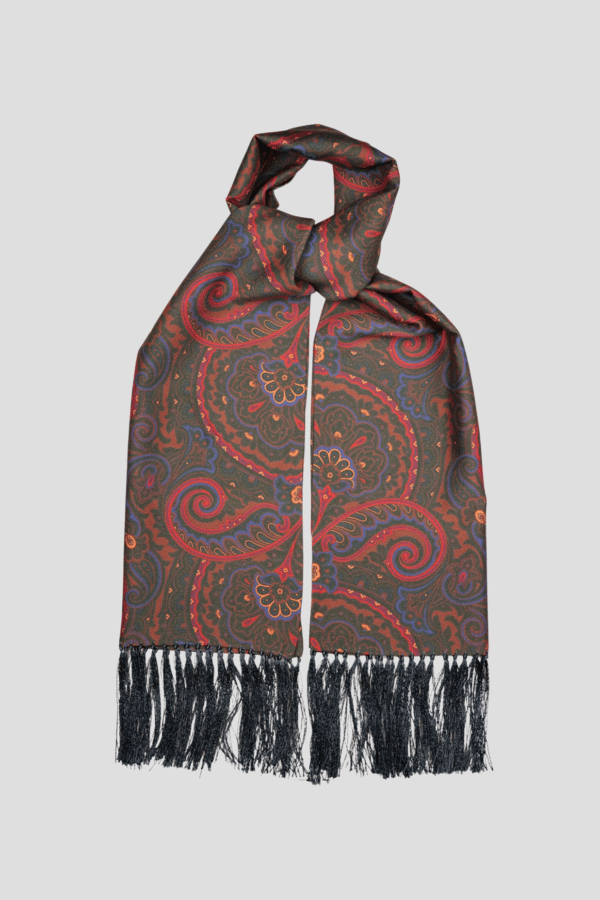
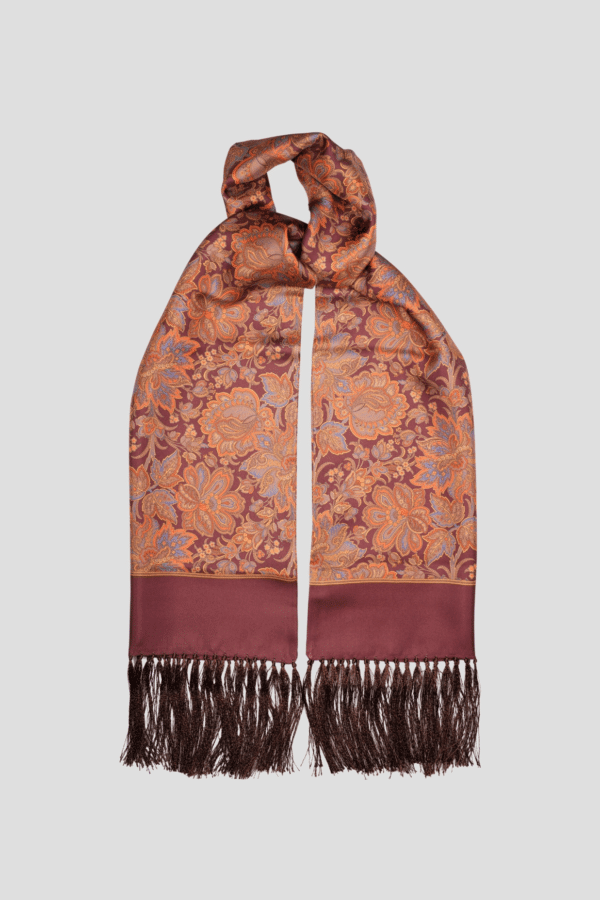
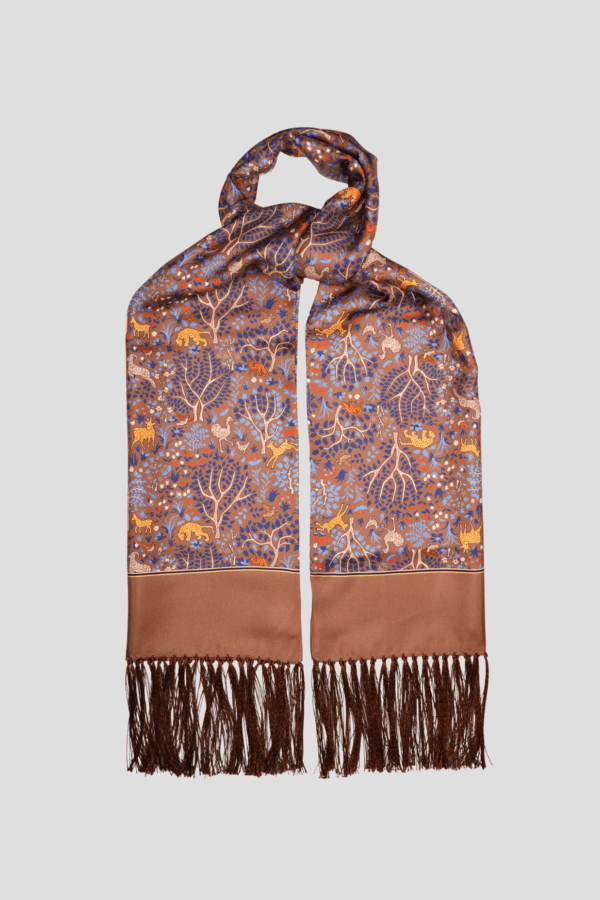
Our long scarves and tube scarves come in two families. The long fringed scarves, in plain colors, measure 35 x 165 cm (14 x 65 inches) including the fringes; they are made by hand in Naples, Italy, in silk twill, with fringes in silk thread woven separately and then sewn by hand. The tube scarves, 33 x 145 cm (13 x 57 inches), are sewn as a closed tube lined with silk, with hand rolled edges, and made in Paris.
Which scarf for which knot
The knots worn around the neck need length. The simple loop and the cross knot are made with a long scarf, the first in mid season over an open coat, the second in winter. The ascot style wants a long, supple scarf, for the evening, with an open shirt collar. The Parisian knot, the everyday knot under a coat, also works with a 90 cm square.
All the others start from a 90 cm square. Opened into a triangle, it shows off the print in daytime. Folded into a band, it becomes a necktie knot for the office, a headband or a ponytail ribbon. Rolled tight, it is a choker for summer; folded narrow, it ties onto a bag handle.
Caring for a silk scarf you tie often
A scarf tied every day works harder than a piece kept in a drawer. A few rules are enough to keep it intact. Silk does not go in the washing machine and reacts badly to water: a drop leaves a ring as it dries. A stain is removed only by a professional dry cleaner. Store the scarf flat or rolled, away from direct light, rather than knotted on a hanger where it would keep the mark of the fold. A crease is treated with a garment steamer held about ten centimeters (four inches) away, never with an iron placed directly on the silk. One last detail, often forgotten: untie the scarf at night rather than pulling it off over your head with the knot still formed. A knot left tight for several days ends up marking the weave.
Frequently asked questions
What is the easiest silk scarf knot?
The Parisian knot. Fold the scarf in half along its length, place it around the neck, and pass both ends through the loop formed by the fold. Three seconds, and it holds all day.
How do you tie a square silk scarf around the neck?
Fold it first into a triangle, starting from the diagonal, then fold the base toward the point until you have a band. That band then ties like a long scarf: Parisian knot, necktie knot, or a simple double wrap tied on the side.
What size silk scarf should I choose?
We offer a single square format, 90 cm: it is the most versatile size. Folded on the bias and then into a band, it ties close to the neck and slips into the hair; unfolded, it allows the shawl and the large drapes. A long scarf suits vertical knots and is worn under a coat.
Can men wear a silk scarf?
Of course, and the knots are exactly the same. The most common uses are the tube scarf slipped under an open shirt collar, the Parisian knot under a coat, and the ascot style for an event where a tie would be too formal.
How do you stop a silk scarf from slipping?
Silk twill is fluid by nature. Rather than tightening further, which crushes the drape, choose a knot that locks on itself: the cross knot or the necktie knot hold noticeably better than the simple loop. A scarf with hand rolled edges also holds better than one with a machine hem, because the roll of the hem creates a point of grip.
Where can I buy a handmade silk scarf?
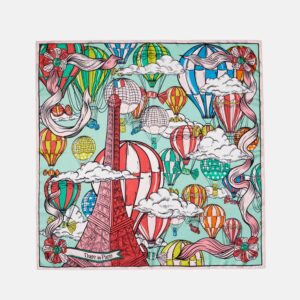
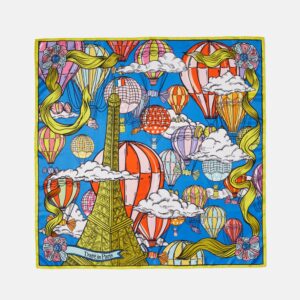
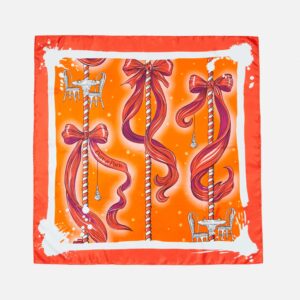
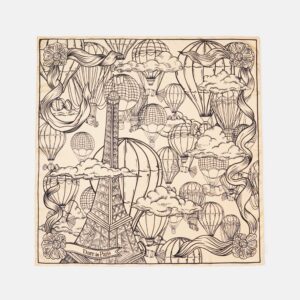
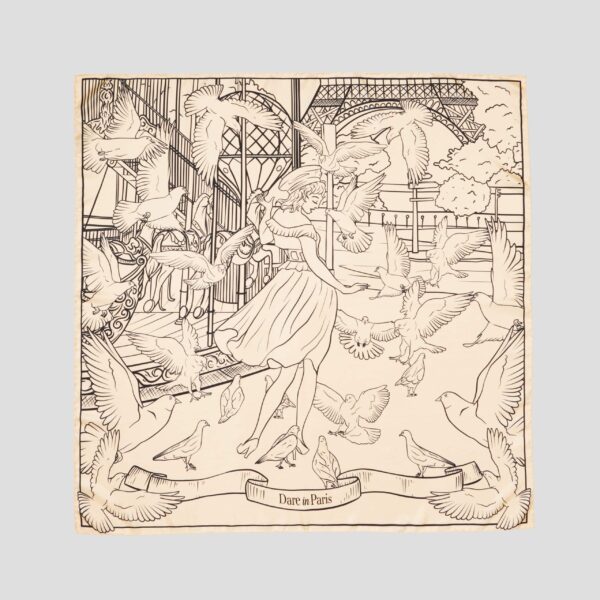
Dare in Paris is an online Maison based in Paris. The motifs of our silk squares are drawn in Paris and printed in Italy on silk twill, and the hems are hand rolled in our Paris workshop, holder of the Fabriqué à Paris label, the official Made in Paris label. The tube scarves are also made in Paris, and the long fringed scarves are made by hand in Naples, Italy. Every piece leaves the workshop in its box, sealed with the Maison’s wax seal, and every order ships from Paris to destinations worldwide: see our shipping and returns page for delivery times by country.
The pieces to tie
Drawn in Paris, printed in Italy and hand rolled in our Paris workshop, holder of the Fabriqué à Paris label.